
Alcohol Detox in Phoenix: Medical Supervision and What It Means
Stopping cold after a long stretch of heavy drinking is one of the few withdrawals that can actually kill you. That’s not scare talk. When alcohol has been doing part of your nervous system’s job for months or years, yanking it away can set off seizures or delirium tremens. Below: the first week of withdrawal, day by day, why white-knuckling it at home is risky, and where alcohol detox in Phoenix fits at Plugged In Recovery.
Supervision sounds like a formality. It isn’t. Someone trained is watching your heart rate and blood pressure, and they know which small signs tend to come right before a big problem.
The Reality of Alcohol Withdrawal
Most people expect quitting to test their willpower. They don’t expect how hard it hits the body. After months or years of heavy drinking, the body has adjusted to a steady supply of a depressant, which makes withdrawal a medical event, not a test of character.
Here’s what’s going on physically. Alcohol slows the brain down, and after months or years the brain pushes back to compensate. Take the alcohol away and that push is suddenly unopposed, which is where the shakes, sweats and racing heart come from. Many families also don’t know supervised detox is often covered by insurance.
The Critical 72 Hour Risk Window
Expect the first shakes or sweats within a few hours of your last drink. Day three is usually the worst of it. If seizures happen, it’s mostly between hour 8 and hour 48, and delirium tremens, which is rarer, can hit anywhere from day three to day eight. A plan for the first night isn’t enough. You need one for the week. Not sure where to start? It’s only a conversation away.
Timeline of the First Week
Understanding this rapid timeline helps families recognize why continuous clinical monitoring is not optional.
| When | What can happen | What care looks like |
| First hours to 24 hours | Tremors, sweating, anxiety, racing heart, trouble sleeping | Regular checks of vital signs and symptoms |
| 8 to 48 hours | Main window for withdrawal seizures | Close observation, medication when needed |
| Around 72 hours | Symptoms usually at their peak | Ongoing monitoring and symptom relief |
| Day 3 to day 8 | Risk window for delirium tremens: confusion, fever, severe agitation | Emergency medical care |
Source: Alcohol Withdrawal Syndrome, StatPearls (NIH National Library of Medicine)
Not everyone goes through every stage. The problem is that nobody can predict who will.
Why Detoxing Alone at Home Is Risky
Plenty of people try to quit cold turkey in their own bedroom, often to avoid the stigma of checking into a facility. For mild withdrawal with no history of seizures or delirium tremens, doctors sometimes manage detox at home, with a support person and regular check-ins. Without that medical plan, though, nobody is there to catch warning signs early. A seizure or a sudden spike in blood pressure isn’t something you can tough out, and families should know the real answer to whether you can die from alcohol withdrawal.
Comparing Detox Environments
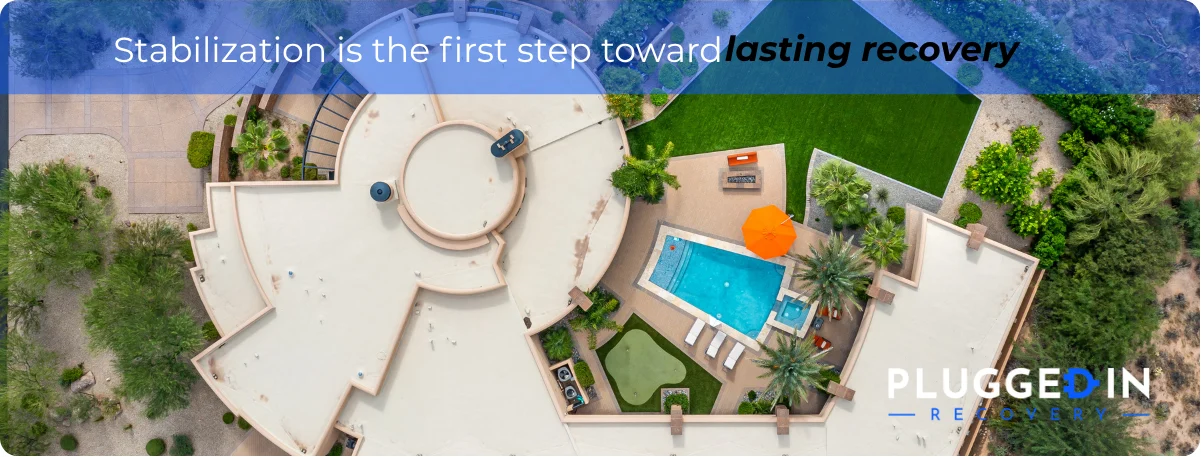
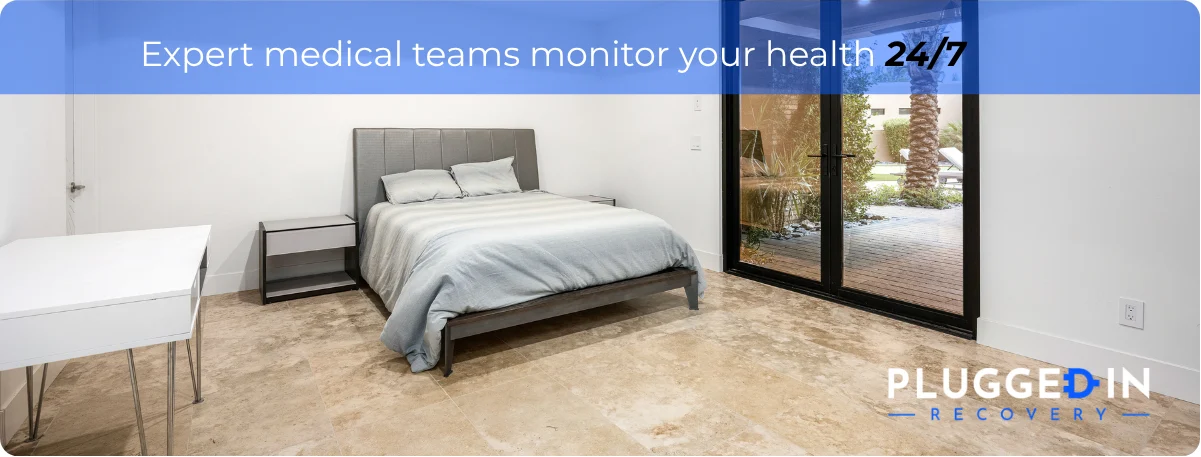
The setting matters too. Plugged In is a luxury alcohol rehab in Phoenix, and our residences are small and private, so nobody gets lost in the shuffle at a vulnerable time. That said, it’s no vacation. The days are full, with individual therapy, clinical groups and recovery meetings.
| Care Feature | Unsupervised Home Detox | Supervised Clinical Detox |
| Vital Monitoring | None. You must rely on subjective feelings of illness. | Continuous tracking of blood pressure, heart rate, and temperature. |
| Seizure Response | Relying on family to call emergency services in time. | Immediate pharmacological intervention by trained medical staff. |
| Comfort Levels | Extreme physical pain, nausea, and severe psychological panic. | Symptoms are medically managed using safe tapering protocols. |
How Plugged In Supports Detox
Our detox support has one job: get you through withdrawal safely and into treatment without a gap in care. Admissions helps plan the detox stage, lines up the right care, and brings you into residential treatment once you’re stable. Medication management is there if you need it, and the team includes a Medical Director and a Director of Nursing.
Detox takes care of the body. It doesn’t fix what drove the drinking, which is why the plan for what comes next matters as much as the first 72 hours.
Planning a Safe Detox
Families weighing whether to manage withdrawal at home or seek professional help often realize that waiting for a catastrophic medical event is a risky strategy. Supervised detox makes that danger far easier to catch and manage.
If you or a family member are planning to stop drinking, please reach out to our team before taking any sudden action. We can help you build a structured, medically sound plan to safely navigate the initial detox window.
Ask the Clinical Director
Does detox fix the drinking problem?
“If I have heart disease, and my doctor tells me I need to exercise, get my rest, and stop eating bacon double cheeseburgers, and I stop doing that, and I get well, but 6 months later I start to move back in the direction of eating bacon double cheeseburgers and not sleeping, and not exercising, I’m going to have a relapse.”
Darren Lee, M.A., LPC, Clinical Director
How long does the brain take to recover after detox?
“It’s not really until about a year and a half to two years that we’re starting to see the brain, the structure and function, behave similarly to how it did prior to… pre-addicted brain states.”
Darren Lee, M.A., LPC, Clinical Director
What should happen after detox?
“We need to get people into a community of recovering people surrounded by accountability, surrounded by language, messaging, and behavior that promotes ongoing abstinence and recovery.”
Darren Lee, M.A., LPC, Clinical Director
Frequently Asked Questions
How long does alcohol detox take?
Plan on about a week. Day three tends to be the hardest, and delirium tremens, when it happens, can still turn up near the end of that first week. Sleep usually takes longer to settle, sometimes a few weeks, and some low-level anxiety can hang around too.
Can I detox from alcohol at home safely?
It depends on how bad the withdrawal is. A doctor may manage a mild case at home with someone checking in on you. But if you’ve had a seizure or delirium tremens before, have other health problems, or drink heavily every day, please don’t do this alone.
What happens after detox is finished?
Your body is clear of alcohol, but whatever drove the drinking is still there. Most people go straight into residential or outpatient care. That’s where therapy, relapse prevention and an aftercare plan start doing the longer work.
Will I be heavily medicated during detox?
No. The medications are there to keep you safe, mainly to head off seizures and take the edge off symptoms, and the doses come down as withdrawal eases. You should be steady and clear enough to start treatment, not knocked out.
Self Assessment Quiz
Physical Dependence Risk Assessment
| Self Assessment Question | Yes (1 Point) | No (0 Points) |
| Do you experience morning tremors that only stop after consuming alcohol? | ||
| Have you ever tried to stop drinking suddenly and experienced a racing heart or severe sweating? | ||
| Do you feel intense physical anxiety when you go more than a few hours without a drink? | ||
| Have you ever suffered a seizure when attempting to reduce your alcohol intake? | ||
| Are you currently planning to quit drinking cold turkey at home by yourself? |
- 0 to 1 Points (Low Risk): Your physical dependency indicators are low. However, psychological dependence may still be present. Speak with a professional about healthy cessation strategies.
- 2 to 3 Points (Moderate Risk): You are displaying signs of physical dependence. Stopping abruptly carries medical risks. A supervised clinical evaluation is highly recommended before you stop drinking.
- 4 to 5 Points (High Risk): Your physical dependence is severe. Attempting to stop drinking at home is incredibly dangerous and potentially fatal. Please contact a medical detox facility immediately to arrange for supervised care.
This is not a diagnosis. If you scored 2 or more, talk to a doctor before you stop drinking.
Preparing for a Safe Clinical Detox
- Contact a medically supervised facility to discuss intake protocols.
- Do not attempt to rapidly taper your alcohol intake without medical guidance.
- Pack comfortable, loose fitting clothing for your stay.
- Bring a complete list of any current prescription medications.
- Arrange for a secure transition from the detox facility directly into a rehabilitation program.