

Luxury Alcohol Rehab for Professionals in Phoenix
For executives, business owners, and high-level professionals, the decision to seek treatment for alcohol use is often delayed by a unique set of fears. You know that you need clinical help, but the prospect of stepping away from your responsibilities feels impossible.
Concerns about career continuity, strict confidentiality from colleagues, and maintaining your professional reputation often overshadow the urgent need for medical care.
Here at Plugged In Recovery, we have designed a specialized alcohol rehab for professionals to close this exact gap. In this article, Laura Zsako, Primary Residential Therapist, describes what the clinical experience looks like within our luxury alcohol rehab in Phoenix.
By pulling back the curtain on our 10-bed privacy model and clinical scheduling, we can show you exactly how our program accommodates active work obligations while delivering elite medical care.
The Burden of the High-Functioning Alcoholic
The term “high-functioning” is often used as a defense mechanism. Professionals are exceptionally skilled at compartmentalizing their lives, ensuring that their performance in the boardroom masks the severity of their addiction at home.
This ability to overachieve is exactly what makes treating executives so complex. The surface looks pristine, but the internal foundation is often crumbling under the weight of immense stress.
Laura notes that breaking through this professional facade is the first critical step in treatment. “When they are high functioning they are trying to high overachieve, right, so what happens clinically, they mask anxiety. They mask depression. Most of them are like, ‘I want to be perfect,’ and I was like, ‘Help me help you with that.’”
Clinicians must approach this demographic with a specific balance of respect for their achievements and objective clinical boundaries. “I validate them without assuming that they are fine, right, because I sit across from clients all day every day and they are like, ‘Oh, I’m fine.’ I’m like, ‘Then why are you here?’ Let’s switch spots, you know.”
Treating the professional requires stripping away the executive title in the therapy room to address the severe, hidden symptoms of early sobriety. Often, once the alcohol is removed, profound anxiety and depressive moods surface rapidly. Recognizing and treating these dual diagnoses is central to our luxury alcohol rehab in Phoenix
Privacy by Design: The 10-Bed Capacity Model
For a professional, confidentiality is not a luxury. It is a strict requirement. The fear of ending up in a large, crowded facility where privacy is compromised keeps many executives out of treatment entirely.
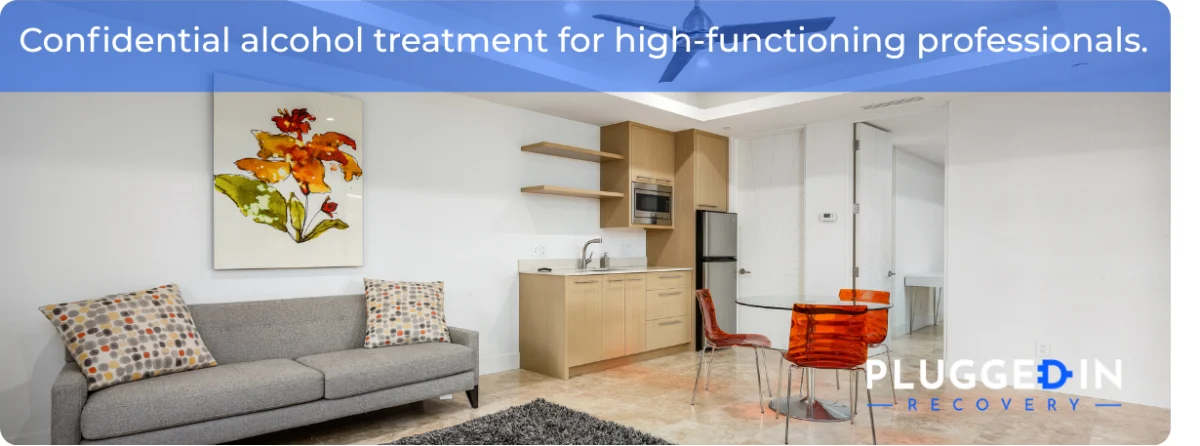
To solve this, our residential program is intentionally capped at a 10-bed capacity. This intimate scale is the cornerstone of our privacy model. It eliminates the chaotic environment of standard rehabs and ensures that your identity and personal struggles remain completely confidential.
“Privacy and safety are huge,” Laura explains. “The majority of the clients that come to me that I work with in individual therapy, they say, ‘Laura, I feel safe here because it is low numbered.’”
This small census also fundamentally changes the therapeutic environment. “I think having 10 beds is awesome because we get the opportunity, everybody knows everybody. It is a very family-oriented small town kind of mantra. It really gives them the opportunity to one open up a little bit more so, right, cause it is a smaller group. Two, to kind of help each other hold each other accountable.”
For professionals seeking a highly discreet environment, you can explore the specific amenities and layout of our facility by visiting our comprehensive overview of our luxury rehab in Scottsdale.
Ready to discuss a treatment plan that respects your career and your privacy? A confidential assessment with our admissions directors is just a brief conversation away at (602) 527-8096.
Balancing Career Continuity with Clinical Rigor
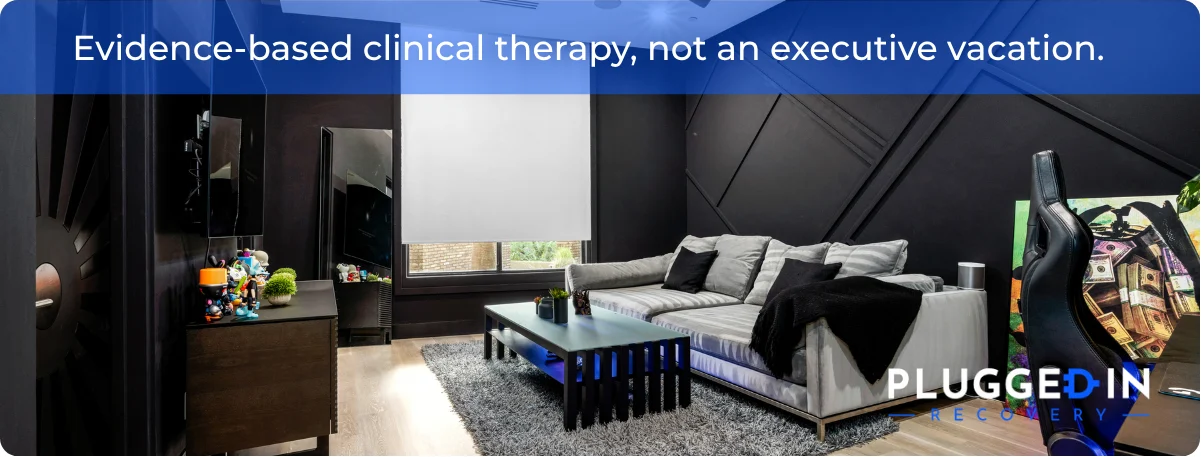
Because our facility offers upscale amenities, families and patients sometimes confuse our medical program with an executive vacation. While the environment is beautiful and comfortable, the daily schedule is highly structured, evidence-based, and clinically intensive.
“I will get family members go, ‘Oh, well man, they are at a resort, why haven’t I heard from my loved one?’ And I was like, ‘Well let me tell you they are not just tanning.’” Laura clarifies. “I mean yes they have like an hour from 3:30 to 4:30 as like their free time, but I think what happens is within this beautiful facility we also are doing some really, really strong clinical groups.”
We utilize the comfortable environment to reduce your baseline stress, allowing you to engage in deep therapeutic work without distraction.
“Even though it looks pretty, right, we are here basically we keep the clients busy from 7:30 in the morning till 8:30 at night,” Laura states. “They are in group therapy twice a week, they have recovery groups, they have in-house meetings that we keep them pretty busy with, they have individual therapy.”
Comparing Care Models
Understanding the difference between a clinical program and a wellness retreat is crucial when making your decision.
| Feature | Executive Wellness Retreat | Clinical Luxury Rehab |
| Primary Focus | Stress reduction and relaxation | Medical stabilization and addiction treatment |
| Medical Supervision | Minimal to none | 24/7 nursing and psychiatric support |
| Daily Schedule | Spa treatments, optional yoga, open schedule | Rigorous clinical therapy from 7:30 AM to 8:30 PM |
| Treatment of Co-occurring Disorders | Not equipped for complex mental health diagnoses | Dual-diagnosis capabilities for anxiety and depression |
| Outcome Goal | Temporary relief from executive burnout | Long-term sobriety and behavioral restructuring |
Deciding to seek medical help for an alcohol addiction does not mean sacrificing the successful career you have carefully built over many years. Our specialized alcohol rehab for professionals offers the exact clinical rigor you need within a highly confidential environment that respects your professional life. Take the first step toward lasting stability today.
Laura Zsako Q&A
How do high-functioning professionals typically present when they first arrive at treatment?
“I validate them without assuming that they are fine because I sit across from clients all day every day and they are like, ‘Oh, I’m fine.’ I am like, ‘Then why are you here? Let’s switch spots, you know.’ When you have somebody who is high functioning, they tend to overanalyze a lot of things. That overanalyzation can cause them to feel like they are a burden at times. They are trying to high overachieve. So what happens clinically is they mask anxiety. They mask depression. Most of them are like, ‘I want to be perfect,’ and I say, ‘Help me help you with that.’”
Why is a smaller facility size so important for someone concerned about their professional reputation?
“Privacy and safety are huge. The majority of the clients that come to me that I work with in individual therapy, they say, ‘Laura, I feel safe here because it is low numbered.’ It is ten beds. I think having that smaller niche for our facility really gives them the opportunity to open up a little bit more so because it is a smaller group. It also allows them to help each other and hold each other accountable clinically from a sobriety standpoint, mentally, and physically. It gives them a more personalized, client centered experience.”
What hidden symptoms typically surface once an executive stops drinking?
“Clients will come in and they are like, ‘I am only here for alcohol.’ And I am like, ‘Little do you know, fourteen days will hit.’ Usually around that fourteenth to fifteenth day, anxiety is coming out. Depressive mood is coming out. Sometimes they will isolate, sometimes they will cry out of nowhere, sometimes they will have a panic attack, sometimes their sleep is affected. Sometimes they will be in group and someone says a word and that triggers them. All of these dual diagnoses are super fun for me because I sit back and I am like, ‘You told me you didn’t have anxiety!’”
Is a luxury residential program just an expensive wellness retreat for executives?
“I get that all day every day from family members. They say, ‘Man, I should come to your facility, it is a resort, you have a pool and you can tan and you have red light and you have a cold plunge and I can actually get back into my workout routine.’ And I am like, even though it looks pretty, it is like looking in a snow globe. We basically keep the clients busy from 7:30 in the morning until 8:30 at night. They are in group therapy twice a week, they have recovery groups, they have in house meetings, they have individual therapy, and they have evening review.”
How do you handle a professional who refuses to accept that they have an underlying mental health issue?
“I am all about starting points. Say they come in and they are like, ‘Hey Laura, I have anxiety.’ I am like, ‘Okay, what is the definition of anxiety to you?’ Because your definition of anxiety is different than mine. Sometimes we have anxiety and we have no idea where it is coming from. That is totally an okay answer too. It is clinically looking at all of this and trying to have a starting point of dissecting everything. I constantly talk to the medical team, the doctor or psych, and say, ‘Hey, this person is not getting any sleep, what can we do from a chemical imbalance standpoint to balance that out?
Frequently Asked Questions
How does the facility ensure confidentiality from my employer and colleagues?
Our entire admissions and clinical process is bound by strict HIPAA regulations and federal confidentiality laws specifically governing substance abuse treatment records (42 CFR Part 2). We cannot and will not confirm your attendance or release any medical records to employers, colleagues, or even family members without your explicit, written consent. Our 10-bed model further ensures that your daily experience is discreet and highly private.
Can I keep my phone and laptop while in residential treatment?
We understand that completely severing contact with your business is not feasible for many executives. While we strongly limit device usage during clinical hours to ensure you remain focused on your therapeutic groups, we accommodate professionals by providing structured, protected time to check emails, use laptops, and make necessary business calls in a private setting.
Does insurance cover a luxury alcohol rehab program?
Yes, most major commercial health insurance policies, including high-tier executive PPO plans, cover residential addiction treatment as part of their behavioral health benefits. The exact out-of-pocket costs and deductibles will depend on your specific policy. Our admissions team provides a completely confidential insurance verification process to give you absolute financial clarity before you arrive.
Will entering rehab damage my career or violate my employment contract?
Seeking medical care for a health condition is highly protected. The Family and Medical Leave Act (FMLA) and the Americans with Disabilities Act (ADA) offer specific legal protections for employees seeking treatment for substance use disorders. Taking a medical leave of absence for an alcohol use disorder is an investment in your long-term cognitive and professional performance. Continuing to struggle with untreated addiction poses a far greater risk to your career trajectory.
How long does an executive residential program typically last?
Treatment length is always dictated by clinical necessity rather than a fixed calendar. While many professionals begin with a standard 30-day program to achieve initial stabilization and detox, our clinical team continuously evaluates your progress. We will work with you to determine the ideal length of stay and help you plan a step-down strategy that safely integrates you back into your high-demand work environment.
Spouse Observation Checklist
Recognizing the Shift in Your Partner
Noticeable increase in alcohol tolerance over the last twelve months.
Intense defensiveness when the topic of drinking is casually mentioned.
Drinking occurs in isolation or after the rest of the household is asleep.
Consistent failure to remember conversations that occurred late in the evening.
Visible morning anxiety that only subsides as the workday progresses.