How to go to rehab and keep your job? Well, going to alcohol rehab while keeping your job follows a clear process, but it is not the process most professionals expect.
Logistics come first, boundaries are established gradually, and some of the clearest paths forward at first glance look like insurmountable hurdles. The assumption that you must choose between your professional livelihood and your health keeps thousands trapped in a cycle of substance dependence.
Laura Zsako, our Primary Residential Therapist at Plugged In, will walk us through what we see every day. We will cover how the schedule accommodates demanding work hours, what confidentiality actually looks like, and how to navigate legal protections seamlessly.
If you are a professional deciding whether seeking help will cost you your career, this is exactly what making it work looks like.
The Identity of the High-Functioning Professional
The professional who wants help but cannot risk their job represents a specific demographic group. These individuals are often executives, managers, lawyers, medical professionals, or leaders who view their career their identity.
For this profile, the number one barrier to entry is not a lack of motivation or a denial of the problem. Instead, it is the deeply held belief that entering a treatment program will act as a professional death sentence, destroying years of networking, promotions, and reputational equity.
When you are used to managing operations, leading teams, and maintaining control over your environment, admitting that a substance has become unmanageable feels like a weakness. High-functioning individuals become experts at masking their struggles, using professional success as proof that their drinking is not truly out of control.
However, functional alcoholism is an exhausting strategy that brings down performance over time. The transition into recovery requires changing the narrative from a career risk to a structured, strategic plan for long-term optimization.
We make understanding your coverage simple and stress-free. Feel free to check your policy benefits confidentially.
The Logistics: What Needs to Happen First
Navigating clinical treatment while remaining employed has a predictable sequence. Understanding this order is what keeps professionals from letting fear dictate their medical decisions and provides a transparent roadmap for what to expect.
| Stage |
What is Happening clinically |
What the Professional Experiences |
| Assessment |
Evaluating clinical needs and determining if an outpatient level of care provides enough medical safety and structural support. |
Extreme relief that viable options exist outside of a mandatory 30 day residential facility lockdown. |
| Legal Strategy |
Establishing structural protections under federal laws if modified schedules or temporary leaves are required. |
Anxiety decreases significantly as job security is explicitly confirmed through objective legal frameworks. |
| Scheduling |
Customizing the Chandler schedule to wrap around standard corporate working hours and professional commitments. |
A busy but highly structured and manageable routine. Hard days are followed by productive, clear-headed ones. |
| Integration |
The professional learns advanced coping mechanisms in the evening and applies them at the office the next morning. |
Small wins that compound over time. Better executive focus at work and an improved emotional presence at home. |
Notice what is absent from this timeline, you don’t have to resign or pause your career. Looking for help doesn’t require burning down the structure you’ve spent decades building.
The primary barrier is rarely the willingness to change. It is the terror that treatment will cost you everything. By breaking down the process into phases, the journey shifts from an existential crisis into an actionable strategy.
You Can Keep Your Job While Getting Help
Navigating the terminology of addiction treatment can be confusing for families. Two of the most common levels of care you’ll encounter are Residential treatment and outpatient alcohol rehab in Phoenix.
While both offer rigorous clinical support, their structure, frequency, and living arrangements differ significantly. Understanding this distinction is crucial for matching a patient to the right level of support.
An Intensive Outpatient Program is a significant step down in intensity from residential care. IOP in Phoenix usually involves meeting three to five days a week for about three hours per session, but you live at home or in a sober living environment.
It provides much more flexibility. Patients can often choose morning or evening tracks, allowing them to integrate their treatment into their existing daily schedules seamlessly.
| Feature |
Luxury Residential Rehab |
Intensive Outpatient Program (IOP) |
| Living Arrangement |
Live on-site 24/7 in a luxury Scottsdale facility |
Live at home or in a sober living environment |
| Clinical Intensity |
The highest level of immersive care |
A flexible, step-down level of care |
| Duration / Frequency |
30 to 90 day personalized programs |
3 to 5 days a week for a few hours |
| Amenities |
Private rooms, gourmet meals, pool, fitness center, massage |
Clinical facility access during session hours |
| Ideal Candidate |
Needs 24-hour support and a complete environmental reset |
Balancing daily life with ongoing recovery |
A standard treatment plan often utilizes both. A patient might start in our luxury residential program for intense stabilization and then step down into IOP in Phoenix as they build confidence and demonstrate consistent sobriety.
What Actually Happens During a Treatment Week
A common misconception for IOP phoenix is that an outpatient alcohol rehab in Phoenix is just unstructured group talking. People picture a circle of folding chairs where everyone complains about their cravings. In reality, a typical week is highly scheduled, evidence-based, and clinically rigorous. When you arrive at our facility, you’re engaging in structured therapeutic modalities.
Individual therapy is also a core component of the week. Patients meet one-on-one with their primary therapist to dive into personal issues that are too sensitive for a group setting.
They’ll process trauma, discuss co-occurring mental health conditions like depression or anxiety, and set specific behavioral goals for the upcoming week.
We make understanding your coverage simple and stress-free. Check your policy benefits confidentially
Advantages of the Outpatient Framework
Choosing an intensive outpatient structure over traditional residential inpatient care offers distinct operational advantages for the working professional.
Rather than removing an individual from their day-to-day life and placing them in an artificial bubble, outpatient care allows the client to face real-world stressors in real time while receiving immediate clinical processing.
- Immediate Field Testing: When you learn a stress-regulation technique during an evening session, you have the immediate opportunity to apply it during a high-stakes board meeting the following morning. This creates a rapid feedback loop that accelerates the internalization of coping mechanisms.
- Preservation of Routine: Maintaining a work schedule provides a stabilizing framework. The routine of waking up, dressed for the office, and fulfilling professional obligations prevents the psychological drift that often occurs when an individual is completely disconnected from their daily responsibilities.
- Financial and Operational Continuity: Outpatient care mitigates the financial strain of uncompensated time away from work, ensuring that businesses continue to run smoothly and professional responsibilities do not fall behind.
How We Support Working Professionals at Plugged In
Professionals arrive at our facility asking one fundamental question expressed in many different ways: how do I execute this process without destroying my livelihood?
What we can honestly communicate to our clients is that navigating clinical treatment alongside demanding employment follows a distinct, manageable pattern. We understand that pattern intimately, and our clinical tracks are built specifically around it.
If your family dynamics and career trajectory require a high degree of structural flexibility, you can explore the comprehensive framework of our outpatient treatment options to see exactly how the clinical pieces fit together with your schedule.
For individuals looking specifically for localized, elite care that honors their professional boundaries, our specialized outpatient alcohol rehab in phoenix is engineered to remove the single biggest barrier for the working professional. We ensure you can prioritize your long-term health while maintaining absolute continuity in your career.
Laura Zsako Q&A
What does early recovery look like for someone balancing a demanding job, and what are they usually not expecting?
“Early recovery is undoubtedly a balancing act, but professionals are usually surprised by how much immediate relief they experience once the secret is out in a safe environment. They expect the logistics to be an impossible nightmare, but the real surprise is how quickly their work performance improves when they are no longer expending all their cognitive energy trying to hide a substance use issue from their peers.”
How do you handle the scheduling conflicts that inevitably arise with working professionals?
“We rely heavily on our flexible Chandler schedule. We understand that a hard stop at 5:00 PM is completely unrealistic for corporate executives, attorneys, or managers. We work directly with the client to build a clinical schedule that wraps around their mandatory career obligations, prioritizing long-term stability over rigid, institutional rules.”
When a stressful event happens at work, what do you tell clients about how to respond without relapsing?
“This is the exact operational benefit of outpatient care. In a residential setting, you are completely shielded from your boss, your emails, or your deadlines. In our program, you experience that intense work stress on a Tuesday afternoon, and by Tuesday night you are sitting in group therapy processing it. We teach them to respond with structural curiosity about their triggers rather than instantly numbing them with a substance.”
When a client finishes the intensive phase of the program, what determines whether they stay well while working full time?
“The professionals who stay well view their step down in care as a transition, not a finish line. They consistently maintain their weekly therapy appointments and they continue to enforce firm boundaries at work. Recovery holds long-term when the professional stops viewing their job as an acceptable excuse to skip their continuing care protocols.”
Frequently Asked Questions
How do you go to rehab and keep your job?
You can successfully complete treatment by utilizing an outpatient program that offers flexible clinical blocks. By utilizing legal protections like the Family and Medical Leave Act and the Americans with Disabilities Act, you can secure the necessary time for clinical care. Proactive communication with human resources regarding a medical leave of absence or modified schedule is the exact method for how to go to rehab and keep your job.
Does FMLA cover outpatient alcohol rehab in phoenix?
Yes, the Family and Medical Leave Act is a federal protection that applies to eligible employees across the country. If you meet the employment requirements, FMLA can be used intermittently to cover the specific hours you need to attend an intensive outpatient program, protecting your position while you receive localized care.
Can my employer fire me for seeking treatment?
Under the ADA, an employer cannot fire you simply for seeking treatment for a substance use disorder. Taking proactive steps to enter rehab protects you. It is important to note, however, that this protection does not cover drinking on the job or corporate policy violations that occurred before you sought professional help.
Will my coworkers find out I am in treatment?
No. Your medical privacy is strictly protected by HIPAA regulations. While human resources may need to know you are taking medical leave to process specific HR paperwork, they are not legally permitted to disclose your specific medical condition, diagnosis, or treatment plans to your coworkers or direct managers.
How long does it take for a professional to complete outpatient alcohol rehab?
The duration varies depending on the severity of the substance use. Stabilization can be established within the first few weeks, while rebuilding daily routines takes months. Most professionals participate in intensive outpatient programming for roughly 10 to 16 weeks before stepping down to weekly counseling as their clinical progress solidifies.
Spouse Observation Checklist
Recognizing the Shift in Your Partner
Noticeable increase in alcohol tolerance over the last twelve months.
Intense defensiveness when the topic of drinking is casually mentioned.
Drinking occurs in isolation or after the rest of the household is asleep.
Consistent failure to remember conversations that occurred late in the evening.
Visible morning anxiety that only subsides as the workday progresses.
Contact Us
Effective alcohol relapse prevention is a highly structured clinical process, not a test of sheer willpower. Here at Plugged In Recovery, we view relapse prevention as an active daily practice that requires the right tools and the right environment.
Laura Zsako, our Primary Residential Therapist, explains what evidence-based relapse prevention actually looks like within our specific outpatient model. Because she actively evaluates when a patient is ready to transition out of residential care, she knows exactly what it takes to succeed and build a lasting foundation. We are looking at the reality of the clinical experience and moving past basic definitions to show you exactly how our patients maintain their sobriety.
Moving Beyond Willpower: The Clinical Approach
A common misconception is that preventing a relapse simply requires a person to try harder. In reality, untreated addiction profoundly alters the brain, making willpower an insufficient defense mechanism. Relapse prevention requires a complete restructuring of how a person handles stress, daily routines, and unexpected triggers.
“When we evaluate someone transitioning out of residential care, we look closely at their foundation,” Laura explains. “If they have a safe home, a reliable routine, and a desire to face real-world challenges with clinical support, they are the perfect fit for an intensive outpatient setting to practice these new skills.”.
By shifting the focus from willpower to structured routines, patients at a outpatient alcohol rehab in Phoenix can approach their ongoing recovery with confidence. They are no longer fighting invisible urges; they are executing a strategic clinical plan.
Identifying Vulnerabilities with the HALT Method
One of the foundational evidence-based tools we utilize in our program is the HALT method. HALT is an acronym that stands for Hungry, Angry, Lonely, and Tired. These four basic physical and emotional states are the most common vulnerabilities that lead to cravings and subsequent relapse.
Laura notes that training patients to routinely check in with their bodies using the HALT method is transformative. “When a patient feels a sudden urge to drink, we teach them to pause and run through the checklist. Have they eaten today? Are they harboring resentment? Have they isolated themselves from their support network? Are they exhausted? Addressing these immediate baseline needs often diffuses the craving entirely.”
- Hungry: Poor nutrition drops blood sugar levels, leading to irritability and poor decision-making.
- Angry: Unprocessed anger creates immense psychological pressure that alcohol previously relieved.
- Lonely: Addiction thrives in isolation, making human connection a vital defense mechanism.
- Tired: Sleep deprivation compromises emotional regulation and weakens impulse control.
Trigger Mapping in the Real World
Alongside the HALT method, our clinical team heavily emphasizes trigger mapping. While residential treatment removes a patient from their primary triggers, an outpatient environment requires them to face those triggers and head-on.
Trigger mapping is a collaborative therapeutic exercise where patients identify specific environments, relationships, times of day, and emotional states that have historically led to alcohol consumption. By visually mapping these vulnerabilities, patients can develop concrete action plans. If walking past a specific neighborhood bar is a known trigger, the map includes an alternate driving route. If interacting with a specific family member causes severe anxiety, the map includes boundaries and pre-planned exit strategies.

The Outpatient Program as a Crucial Step-Down
The transition from 24-hour supervision to total independence is often too jarring for someone newly sober. This is why utilizing the outpatient program as a structured step-down is so vital.
An Intensive Outpatient Program occupies a critical middle ground in addiction treatment and alcohol relapse prevention. It provides rigorous clinical care at a outpatient alcohol rehab in Phoenix while allowing patients to sleep in their own beds. This specific balance of accountability and real-world independence is exactly where relapse prevention strategies are tested and solidified.
When evaluating care options, it is helpful to understand the practical differences in how relapse is prevented across different levels of support.
Comparing Treatment Contexts
| Feature |
Residential Care |
Outpatient Care (Step-Down) |
| Living Arrangement |
Live on-site 24/7 in a secure facility |
Live at home or in a sober living environment |
| Trigger Management |
Complete removal from real-world triggers |
Actively navigating real-world triggers with clinical guidance |
| Relapse Prevention Focus |
Initial stabilization and psychological education |
Practical application of trigger mapping and the HALT method |
| Clinical Support |
24-hour continuous supervision |
Scheduled sessions three to five days a week |
A standard treatment plan often utilizes both levels of care for alcohol relapse prevention. A patient might start in our residential program for intense stabilization and then step down into an outpatient alcohol rehab in Phoenix as they build confidence and demonstrate consistent sobriety. They are building sober habits in the exact environment where they will need to maintain them for the rest of their lives.
Ready to discuss your treatment options? A confidential and free assessment with our clinicians is just a brief conversation away (602) 527-8096.

Integrating Family and Aftercare Involvement
Recovery is not an isolated event that ends when a formal program concludes. Long-term success relies heavily on sustained aftercare involvement.
Once the intensive phase of the outpatient program is complete, our focus shifts to maintaining the structure the patient has built. This involves transitioning patients into ongoing weekly therapy sessions, psychiatric medication management if needed, and active participation in alumni support groups.
Furthermore, alcohol relapse prevention must involve the patient’s support system. We educate families on the HALT method and the patient’s specific trigger maps so that loved ones can recognize the warning signs of a potential relapse before it occurs. This collaborative approach ensures the home environment remains a safe and structured haven.
We make understanding your coverage simple and stress-free. Check your policy benefits securely and take your first step towards recovery.
Laura Zsako Q&A
How do we shift a family’s mindset from fearing a relapse to actively planning for prevention?
“Families often carry an immense amount of trauma from past relapses. The fear is completely valid. We shift that mindset by pulling back the curtain on our clinical process. When families see that we are not relying on the patient’s willpower, but rather teaching them specific tools like trigger mapping, the anxiety begins to lift. We show them the blueprints of the structure we are building.”
What role does an outpatient program play for someone who has relapsed in the past?
“If someone has relapsed previously, it usually means their transition back to daily life lacked sufficient clinical scaffolding. An outpatient program is the perfect intervention. It allows the patient to live at home, face the stressors that previously led to a relapse, and then bring those exact stressors into group or individual therapy the very next day. We process the struggle in real-time.”
How does Plugged In Recovery handle a patient who experiences a relapse while in outpatient care?
“We view relapse as a clinical symptom that requires an adjustment in treatment, not a moral failure that requires punishment. If a patient drinks while in the program, we immediately reassess their treatment plan. This might mean increasing the frequency of their sessions, adjusting their therapeutic approach, or stepping them up to a higher level of care temporarily until they regain their stability.”
Why is community so important for relapse prevention?
“Addiction thrives in isolation. When a patient leaves residential care, the biggest threat to their sobriety is loneliness. Group therapy in an outpatient setting breaks that isolation immediately. Furthermore, group therapy provides a safe laboratory to practice healthy communication, set boundaries, and receive objective feedback from people who truly understand the experience.”
Frequently Asked Questions
Is an outpatient program effective for preventing alcohol relapse?
Yes. Extensive data indicates that intensive outpatient programs are just as effective as inpatient treatment for most individuals with substance use disorders, provided they have a strong support system at home. The key is matching the patient to the right level of care at the right time.
How does the HALT method actually prevent a relapse?
The HALT method prevents relapse by forcing the individual to pause and evaluate their physiological and emotional state before acting on a craving. By identifying and resolving hunger, anger, loneliness, or exhaustion, the intensity of the craving usually subsides, allowing the logical brain to regain control.
Will I lose my job if I enter an outpatient program to prevent a relapse?
Many adults avoid getting the help they desperately need because they believe entering rehab means sacrificing their career. That is exactly where an intensive outpatient program provides the most practical value. Patients can often choose morning or evening tracks, allowing them to integrate their treatment into their existing daily schedules seamlessly. Furthermore, the Family and Medical Leave Act offers specific protections for employees seeking treatment for substance use disorders.
What kind of aftercare is provided once the outpatient program ends?
Comprehensive programs ensure that patients are not left unsupported after discharge. Aftercare typically includes continued access to individual therapy, medication management for co-occurring disorders, and integration into robust alumni networks and community support groups.
How long does an outpatient program last?
There is no fixed timeline because treatment is always individualized. Most patients spend anywhere from 8 to 12 weeks in an intensive outpatient setting, depending on their clinical progress. The clinical team continuously evaluates the patient’s stability and steps them down to lower levels of care as they meet their relapse prevention goals.
Spouse Observation Checklist
Recognizing the Shift in Your Partner
Noticeable increase in alcohol tolerance over the last twelve months.
Intense defensiveness when the topic of drinking is casually mentioned.
Drinking occurs in isolation or after the rest of the household is asleep.
Consistent failure to remember conversations that occurred late in the evening.
Visible morning anxiety that only subsides as the workday progresses.
Contact Us
The decision to seek help for alcohol abuse is a big step. For many adults, the idea of leaving a career, family responsibilities, and daily life for a residential facility feels completely impossible. That’s where a highly structured outpatient alcohol rehab in Phoenix comes in. You can stay employed, stay connected to your family, and still get serious clinical support.
In this article, Laura Zsako our Primary Residential Therapist, breaks down exactly what outpatient alcohol rehab looks like at the Plugged In Recovery facility in Chandler. This is an inside view of our specific program, moving from the first phone call all the way through completion.
If you are researching options and wondering if outpatient care can meet your level of need without requiring a leave of absence, this guide explains how the clinical model actually works in practice.
Intake and Assessment: Where It All Starts
The process does not begin with generic group therapy. It starts with a comprehensive clinical assessment. Many patients walk through the doors of our Chandler outpatient alcohol rehab unsure of exactly what level of care they need.
During the intake process, the clinical team looks at a patient’s entire history. They evaluate the severity of the alcohol use, any co-occurring mental health conditions, and the stability of the patient’s home environment.
“We need to know what you are going home to,” our Laura explains. “If a patient has a highly supportive family and a safe living environment, outpatient is an incredibly effective option. If they are going home to a volatile situation with active substance use, we might need to discuss a higher level of care or sober living arrangements first.”
Once the assessment is complete, the clinical team builds a customized treatment plan. This plan dictates the frequency of sessions, the specific therapies utilized, and the initial level of care.
We make understanding your coverage simple and stress-free. Check your policy benefits confidentially using our insurance verification tool.
PHP vs. IOP: Understanding the Levels of Care
Outpatient care is not a single, uniform experience. At the Chandler outpatient alcohol rehab, treatment is structured in step-down levels. This allows patients to receive intensive support early in recovery and gradually transition to lower levels of care as they build stability. The two primary pillars are the Partial Hospitalization Program and the Intensive Outpatient Program.
| Feature |
Partial Hospitalization Program (PHP) |
Intensive Outpatient Program (IOP) |
| Intensity |
The highest level of outpatient care |
A flexible step-down level of care |
| Frequency |
5 days a week |
3 to 5 days a week |
| Daily Hours |
Typically 5 to 6 hours per day |
Typically 3 hours per day |
| Best For |
Transitioning out of medical detox |
Balancing work, school, and ongoing recovery |
| Clinical Focus |
Intense stabilization and skill building |
Real-world application of coping mechanisms |
A patient might start in PHP immediately after completing detox. This provides a structured, full-time treatment environment during the day, while allowing the patient to sleep in their own bed at night. As they reach clinical milestones, they step down into IOP, which offers more flexibility for returning to work or managing a household.
What a Typical Week Looks Like in Chandler
A common misconception is that outpatient rehab just involves sitting in a circle and talking about cravings once a week. The reality of our outpatient alcohol rehab in Phoenix is much more rigorous and clinical.
A typical week in the Intensive Outpatient Program involves three hours of clinical work per day, several days a week. Patients arrive at the facility and check in, which often includes regular, randomized drug and alcohol screenings to ensure accountability.
The core of the week is built around group therapy. These aren’t just open discussion forums. They are psychoeducational and process groups led by licensed therapists. A Tuesday morning group might focus entirely on identifying physiological triggers, while a Thursday session might be dedicated to relapse prevention planning.
In addition to group sessions, patients meet weekly with their primary therapist for one-on-one counseling. This is where the deep, individualized work happens. Patients process trauma, discuss relationship dynamics, and address the root causes of their alcohol dependence in a private, secure setting.
If you have specific questions about the Chandler facility schedule or would like to tour the facility, we are more than happy to welcome you and show you around.

The Clinical Model: Therapy, Psychiatry, and Support
Treating alcohol addiction effectively requires a multi-disciplinary approach. The Plugged In Recovery clinical model is built on evidence-based practices that address both the addiction and the underlying mental health conditions.
Cognitive Behavioral Therapy (CBT) is heavily utilized to help patients recognize the thought patterns that lead to drinking. Dialectical Behavior Therapy (DBT) skills are taught to improve emotional regulation and distress tolerance. This is especially crucial for patients who use alcohol to cope with intense stress or anxiety.
Furthermore, psychiatric support is a core component of the program. Patients have access to psychiatric providers who can manage medications for co-occurring disorders like depression or generalized anxiety. Treating these underlying issues simultaneously is vital for long-term success.
“You can’t just tell someone to stop drinking if their baseline is severe, unmanaged anxiety,” Laura notes. “The alcohol was their medication. We have to provide healthier, safer ways to manage that anxiety, whether that’s through behavioral therapy, psychiatric medication, or a combination of both.”
Is Outpatient Alcohol Rehab Enough?
This is the most common question families ask when comparing options. The answer depends heavily on the individual’s commitment and their environment.
Outpatient care offers a distinct advantage: real-time practice. When a patient is in a residential facility, they are protected from the outside world. It is easy to stay sober when there is no alcohol available and no daily life stress.
In an outpatient alcohol rehab in Phoenix, patients deal with rush hour traffic, demanding bosses, and family conflicts. They experience the triggers of normal life, but they have a clinical team actively supporting them through it.
If a patient has a highly triggering day at work on Tuesday, they can process that exact scenario in group therapy on Wednesday. This immediate application of coping skills builds tremendous resilience.
However, outpatient is only enough if the patient is fully engaged. It requires a willingness to show up, participate honestly, and implement the tools at home.
Ready to discuss your treatment options? A confidential and free assessment with our clinicians is just a brief conversation away (602) 527-8096.
Laura Zsako Q&A
What surprises patients most when they start outpatient rehab?
Laura: The level of structure and accountability. A lot of people think outpatient means dropping in for a chat when they feel like it. When they realize they are expected to be here on time, participate actively, and engage in the clinical work, it shifts their perspective. They realize this is serious medical and psychological care, just delivered flexibly.
How do you handle patients who are working full-time?
Laura: We build the schedule with working professionals in mind. We offer different tracks and group times so people don’t have to choose between their livelihood and their recovery. The goal of outpatient is to help you integrate recovery into your real life, and keeping your job is often a big part of that stability.
What role do families play in the outpatient process?
Laura: Families are critical. We incorporate family therapy sessions because addiction doesn’t just happen to the individual, it happens to the whole household. We help spouses and parents understand boundary setting, enabling behaviors, and how to actually support their loved one without burning themselves out.
How do you measure progress in an outpatient setting?
Laura: We look at functional milestones. Are they maintaining sobriety? Yes, that’s the baseline. But we also look at whether their sleep has improved, if they are communicating better with their spouse, and if their anxiety scores are dropping. Progress is measured by how much of their life they are getting back.
Frequently Asked Questions
What is the primary difference between residential and outpatient alcohol rehab?
Residential rehab requires you to live at the facility full-time, providing 24-hour supervision and a completely controlled environment. Outpatient rehab allows you to live at home and maintain your daily responsibilities while attending intensive treatment sessions at the clinic during the day or evening.
Does insurance cover outpatient alcohol rehab?
Yes, most major commercial health insurance plans cover outpatient substance abuse treatment, including both PHP and IOP levels of care. Coverage varies by policy, so the first step is always verifying your specific benefits with our admissions team.
How long does the outpatient program in Chandler last?
There is no fixed timeline because treatment is individualized. Most patients spend anywhere from 4 to 12 weeks moving through the different phases of the program, depending on their clinical progress and the level of care they require.
Can I still go to work while in the Intensive Outpatient Program?
Absolutely. The IOP level of care is specifically designed for individuals transitioning back into their daily routines. The schedule requires a few hours a day, several days a week, making it possible to coordinate treatment around a standard work schedule.
What happens if I relapse while in an outpatient program?
Relapse is treated as a clinical symptom, not a moral failure. If a patient drinks while in the program, the clinical team reassesses their treatment plan. This might mean increasing the frequency of sessions, adjusting their therapeutic approach, or stepping them up to a higher level of care temporarily to regain stability.
Spouse Observation Checklist
Recognizing the Shift in Your Partner
Noticeable increase in alcohol tolerance over the last twelve months.
Intense defensiveness when the topic of drinking is casually mentioned.
Drinking occurs in isolation or after the rest of the household is asleep.
Consistent failure to remember conversations that occurred late in the evening.
Visible morning anxiety that only subsides as the workday progresses.
Contact Us
In most cases, no, you cannot get fired for going to rehab. Two federal laws, the Americans with Disabilities Act (ADA) and the Family and Medical Leave Act (FMLA), protect most employees who seek treatment for alcohol use disorder before workplace performance becomes an issue.
Fear of losing your job is the most common reason working professionals delay getting help, but for many people considering outpatient alcohol rehab in Phoenix, that fear is based on a misunderstanding of what the law actually says – and what treatment actually requires.
This article is for informational purposes only and does not constitute legal advice. Consult a qualified employment attorney for guidance specific to your situation.
What Federal Law Actually Protects
Two laws form the foundation of your workplace rights when seeking addiction treatment.
The Family and Medical Leave Act (FMLA), administered by the U.S. Department of Labor, allows eligible employees to take up to 12 weeks of unpaid, job-protected leave per year for a serious health condition – including alcohol use disorder. While on FMLA leave, your employer must hold your position and maintain your health benefits. You are not required to disclose your specific diagnosis. Telling HR you need leave for a serious medical condition is sufficient.
The Americans with Disabilities Act (ADA), enforced by the Equal Employment Opportunity Commission, classifies alcohol use disorder as a protected disability. Under the ADA, employers with 15 or more employees cannot fire, demote, or refuse to promote someone because they sought treatment for addiction.
FMLA eligibility requirements:
- Your employer has 50 or more employees within 75 miles
- You have worked there for at least 12 months
- You have worked at least 1,250 hours in the past year
If your employer has fewer than 50 employees, FMLA may not apply – but ADA protections may still cover you. Some states also offer broader protections than federal law, so checking your state’s labor laws is worth doing.
One important limit both laws share: neither the ADA nor the FMLA protects employees who are currently using alcohol at work or violating workplace conduct policies. The protection applies to seeking treatment, not to active impairment on the job.
Why Timing Matters More Than Most People Realize
If your employer has already documented performance issues related to your drinking, seeking treatment afterward does not erase that record. Your employer can still act on those prior issues. The legal protection is significantly stronger for people who seek treatment proactively – before workplace consequences have escalated.
The professional who asks for help now, while their performance is still intact, is in a far stronger legal and practical position than the one who waits until a paper trail exists. That is not a reason to delay. It is a reason to move sooner.
What You Do and Do Not Have to Tell Your Employer
Confidentiality is one of the most misunderstood aspects of this process, and clarifying it often removes the last barrier for fence-sitters.
| What your employer can ask |
What they cannot ask |
| Whether you need medical leave and for how long |
Your specific diagnosis or what substance you are being treated for |
| Whether you can perform your essential job functions |
Details of your treatment plan or program |
| For documentation from a healthcare provider confirming the need for leave |
To speak directly with your treatment provider |
Outpatient Treatment
The Option Most Working Professionals Do Not Consider
Here is what changes the calculation entirely for many people: outpatient treatment does not require time off.
For professionals whose drinking has not yet required a residential level of care, outpatient treatment means attending structured therapy sessions on a schedule that works around employment. No leave of absence required. No formal disclosure to HR. No gap in your work record.
Plugged In Recovery’s outpatient alcohol rehab in Phoenix operates from the Chandler location and is built specifically for people who need real clinical support without stepping away from their lives. The program is designed around the schedules of professionals, parents, and students who cannot put their responsibilities on hold.
Both programs at Plugged In Recovery accept most major insurance and offer same-day intake.

If the Job Fear Is What Is Stopping You
The professionals who call us most often say the same thing: they waited longer than they should have because they were afraid of what seeking help would cost them at work. In most cases, the law protected them. In almost every case, the drinking was already costing them more than treatment ever would have.
Can you get fired for going to rehab? In most situations, no, not if you take the right steps, at the right time. And for many people, outpatient alcohol rehab in Phoenix means there is no leave, no disclosure, and no disruption to manage at all.
If you want to understand what your specific situation looks like before making any decision, the admissions team at Plugged In Recovery’s alcohol rehab program in Phoenix is available for a confidential conversation. Same-day intake is available. The call does not commit you to anything.
Verify your Insurance
FAQ
Does my employer have to know I’m going to rehab?
No. Under FMLA, you only need to tell your employer you require leave for a serious medical condition – you are not required to name it. Your treatment facility cannot share any information with your employer without your written consent under HIPAA. If you attend outpatient treatment outside of work hours, you may not need to say anything to your employer at all.
Will I still have a job when I get back from rehab?
Under FMLA, your employer must hold your position – or an equivalent one – until you return, and your health benefits must continue during leave. FMLA leave is unpaid, though you may use accrued vacation or sick days concurrently. If you attend outpatient alcohol rehab in Phoenix without taking formal leave, there is no job interruption to manage.
Can I go to rehab without losing my job?
In most cases, yes, if you follow the correct steps. Request FMLA leave before starting treatment, provide a healthcare provider’s documentation confirming the need for leave, and follow your company’s leave policy. The ADA adds a second layer of protection – your employer cannot fire, demote, or refuse to promote you because you sought treatment. Seeking help before workplace performance is affected gives you the strongest legal standing.
Can I work while going to rehab?
Yes, if outpatient treatment is appropriate for your situation. Outpatient programs require 9 to 19 hours of structured treatment per week, typically scheduled in blocks that work around employment. You attend sessions, then return home and to work as normal. A clinical assessment determines whether outpatient is the right fit – for many working professionals, it is.
Acute alcohol withdrawal typically lasts between five and seven days. For most individuals, initial symptoms begin within six to 24 hours after their last drink.
The physical and neurological effects peak around the 72 hour mark, which is also when the risk for severe complications like delirium tremens is highest.
After the first week, acute physical symptoms usually resolve, though protracted psychological symptoms known as Post Acute Withdrawal Syndrome can persist for several months. Plugged in Recovery can assist you or your loved ones thorough this trying time.
This article is for informational purposes only and does not constitute legal advice. Consult a qualified employment attorney for guidance specific to your situation.
The Alcohol Withdrawal Timeline
Understanding the stages of withdrawal helps you know what to expect. The medical timeline progresses through three primary phases.
| Withdrawal Stage |
Timeframe |
Common Symptoms |
| Stage 1 |
6 to 24 hours |
Anxiety, nausea, insomnia, mild tremors, sweating, and elevated heart rate. |
| Stage 2 |
24 to 72 hours |
Increased blood pressure, confusion, fever, and peak risk for delirium tremens (DTs) or seizures. |
| Stage 3 |
72 hours to 7 days |
Gradual tapering of acute physical symptoms, persistent irritability, and mood fluctuations. |
Acute Withdrawal vs. Post Acute Withdrawal Syndrome (PAWS)
Research from the National Institute on Alcohol Abuse and Alcoholism (NIAAA) distinguishes between the immediate physical detox and the longer psychological recovery. Understanding both stages is essential for a safe and successful path to sobriety.
- Acute Withdrawal
- This phase covers the dangerous, immediate physical reactions of the central nervous system adapting to the absence of alcohol, typically lasting five to seven days.
- Symptoms peak around the 72-hour mark, when the risk for severe complications such as seizures and delirium tremens (DTs) is highest. Medical supervision is critical during this window.
- Post Acute Withdrawal Syndrome (PAWS)
- PAWS involves ongoing psychological and emotional adjustments that follow the acute physical detox.
- Symptoms include poor sleep, brain fog, anxiety, and cravings, which can persist for weeks or months after the acute phase ends.
- Managing these protracted symptoms often requires continued therapeutic support and structured aftercare.
Why Medical Supervision Changes the Risk Profile
Attempting to stop drinking without medical support carries significant risks. The timeline above is predictable, but individual severity is not.
Medical supervision changes the risk profile at every single stage of the process. Doctors can administer medications to prevent seizures, manage heart rates, and keep you comfortable.
If you are planning to stop drinking, securing professional support is the safest path forward. Starting with a medically supervised alcohol detox in Phoenix ensures you navigate the highest risk window safely.
Once the acute phase is over, stepping down into an outpatient treatment program provides the necessary structure to manage PAWS and build long term sobriety.

Taking the Next Safe Step
The timeline for physical detox is short, but the journey to lasting sobriety requires ongoing support. You do not have to manage these early, uncomfortable days on your own.
If you have questions about safely managing your symptoms or taking the first step, reach out to our team to start the conversation of a butter future. We are here to listen.
Verify your Insurance
FAQ
What is the most dangerous day of alcohol withdrawal?
The most dangerous period of alcohol withdrawal typically occurs between 48 and 72 hours after the last drink. During this window, the risk for severe complications like seizures and delirium tremens (DTs) reaches its peak. Medical supervision is strongly advised during this timeframe to manage sudden spikes in neurological activity.
Can you stop drinking cold turkey?
Stopping cold turkey is highly discouraged for heavy drinkers due to the risk of fatal complications. Sudden cessation can shock the central nervous system, triggering seizures or cardiac events. Medical professionals recommend supervised detox to safely manage the physical dependence through medication and monitoring.
How long does brain fog last after quitting alcohol?
Brain fog is a common symptom of Post Acute Withdrawal Syndrome (PAWS) and can last anywhere from a few weeks to several months. The brain requires time to heal and rebalance its neurotransmitters after prolonged alcohol use. Consistent hydration, nutrition, and continued therapeutic support accelerate this cognitive recovery.
What are the first signs of delirium tremens?
Early warning signs of delirium tremens include profound confusion, rapid heartbeat, high fever, heavy sweating, and vivid hallucinations. These symptoms usually emerge two to three days after the last drink. Delirium tremens is a medical emergency that requires immediate intervention to prevent fatal outcomes.
An Intensive Outpatient Program isn’t just a weekly therapy check-in, and it isn’t a full-time residential commitment. It occupies a critical middle ground in addiction treatment. IOP in Phoenix provides rigorous clinical care while allowing patients to sleep in their own beds.
In this article, Laura Zsako, Primary Residential Therapist here at Plugged In Recovery, explains the inner workings of an IOP in Phoenix. Because she actively evaluates when a patient is ready to transition out of residential care, she knows exactly what it takes to succeed in IOP.
We’re looking at the reality of the clinical experience, moving past the basic descriptions you’ll find in standard directories.
Ultimately, the right level of care is the one that matches your life right now.
Identifying the Ideal IOP Candidate
Who actually belongs in an intensive outpatient program? It’s a very specific clinical profile. Laura notes that the ideal candidate is someone who requires intensive clinical support to maintain sobriety but has a highly stable and supportive environment.
“When we evaluate someone transitioning out of residential care, we look closely at their foundation,” Laura explains. “If they have a safe home, a reliable routine, and a desire to face real-world challenges with clinical support, they’re the perfect fit for an intensive outpatient setting.”
They’re usually highly motivated individuals who recognize the severity of their addiction but have external responsibilities they simply can’t abandon.
They might be caring for children, managing a household, or maintaining their employment.
They need the heavy structure of a clinical program, but they don’t need the 24-hour supervision of a residential facility. It’s a balance of accountability and real-world independence.
How IOP Differs from Residential Care in Structure and Intensity
Navigating the terminology of addiction treatment can be confusing for families. Two of the most common levels of care you’ll encounter are Residential treatment and outpatient alcohol rehab in Phoenix.
While both offer rigorous clinical support, their structure, frequency, and living arrangements differ significantly. Understanding this distinction is crucial for matching a patient to the right level of support.
An Intensive Outpatient Program is a significant step down in intensity from residential care. IOP in Phoenix usually involves meeting three to five days a week for about three hours per session, but you live at home or in a sober living environment.
It provides much more flexibility. Patients can often choose morning or evening tracks, allowing them to integrate their treatment into their existing daily schedules seamlessly.
| Feature |
Luxury Residential Rehab |
Intensive Outpatient Program (IOP) |
| Living Arrangement |
Live on-site 24/7 in a luxury Scottsdale facility |
Live at home or in a sober living environment |
| Clinical Intensity |
The highest level of immersive care |
A flexible, step-down level of care |
| Duration / Frequency |
30 to 90 day personalized programs |
3 to 5 days a week for a few hours |
| Amenities |
Private rooms, gourmet meals, pool, fitness center, massage |
Clinical facility access during session hours |
| Ideal Candidate |
Needs 24-hour support and a complete environmental reset |
Balancing daily life with ongoing recovery |
A standard treatment plan often utilizes both. A patient might start in our luxury residential program for intense stabilization and then step down into IOP in Phoenix as they build confidence and demonstrate consistent sobriety.
What Actually Happens During a Treatment Week
A common misconception for IOP phoenix is that an outpatient alcohol rehab in Phoenix is just unstructured group talking. People picture a circle of folding chairs where everyone complains about their cravings. In reality, a typical week is highly scheduled, evidence-based, and clinically rigorous. When you arrive at our facility, you’re engaging in structured therapeutic modalities.
Individual therapy is also a core component of the week. Patients meet one-on-one with their primary therapist to dive into personal issues that are too sensitive for a group setting.
They’ll process trauma, discuss co-occurring mental health conditions like depression or anxiety, and set specific behavioral goals for the upcoming week.
We make understanding your coverage simple and stress-free. Check your policy benefits securely using our insurance verification tool

Balancing Treatment and Employment
One of the biggest barriers to seeking treatment is the fear of consequences. Many adults avoid getting the help they desperately need because they believe entering rehab means sacrificing their career or losing their business. That’s exactly where an intensive outpatient program provides the most practical value.
Furthermore, there are legal protections in place for individuals seeking medical care for addiction. If you’re worried about the implications of getting help, you can review our detailed guide to understand if you can get fired for going to rehab.
The Family and Medical Leave Act offers specific protections for employees seeking treatment for substance use disorders.
The reality is that untreated addiction’s far more likely to damage your career than seeking medical care. Getting help is an investment in your professional future, not a detriment to it.
What the Research Shows About IOP Outcomes
Patients often wonder if an outpatient alcohol rehab in Phoenix is actually as effective as a residential stay. The clinical research provides a clear and encouraging answer. When the right patient is matched with the right level of care, IOP in Phoenix outcomes are incredibly strong.
Extensive studies and data collected by SAMHSA indicates that intensive outpatient programs are just as effective as inpatient treatment for most individuals with substance use disorders, provided they have a strong support system at home.
They’re building sober habits in the exact environment where they’ll need to maintain them for the rest of their lives. This builds lasting resilience.
Finding the Right Outpatient Program in Phoenix
Selecting the right program requires looking beyond generic directories and marketing materials. You need a facility that offers a comprehensive clinical model. This includes psychiatric support for co-occurring disorders, licensed therapists, and flexible scheduling that respects your outside responsibilities.
If you’re researching an IOP phoenix program, it’s crucial to ask about the specific therapeutic modalities they use. You want a team of licensed medical professionals and clinical therapists, not just behavioral technicians overseeing a room. Ask about their staff-to-patient ratio and whether they offer customized family programming.
For more information on how our specific clinical model operates, you can review our comprehensive overview of outpatient treatment.
Additionally, if you’re looking for specific regional support, understanding the nuances of outpatient alcohol rehab in Phoenix can help you make an informed decision for yourself or your family member.
Ready to discuss your treatment options? A confidential and free assessment with our clinicians is just a brief conversation away (602) 527-8096.
Laura Zsako Q&A
What does IOP actually stand for and who is it designed for?
“IOP stands for Intensive Outpatient Program. It’s designed for individuals who need significant clinical support to overcome addiction but have the stability and internal motivation to live at home. It’s the perfect fit for someone transitioning out of residential care, or someone who recognizes their drinking is out of control but needs more than just a weekly one-hour therapy session. We’re providing a highly structured environment without completely removing them from their daily life.”
How does a patient or family know if they need PHP or IOP?
“It comes down to their current level of vulnerability and clinical stability. As a residential therapist, I see this transition all the time. If a patient’s struggling to string together even a few days of sobriety and feels completely overwhelmed by their environment, PHP provides that crucial daily anchor. They need eyes on them five days a week. If they have some stabilization and can manage their triggers for a day or two but still need intensive therapeutic work, IOP’s usually the right fit. We figure this out together during the initial clinical assessment.”
What happens if a patient relapses while attending an IOP?
“We view relapse as a clinical symptom that requires an adjustment in treatment, not a moral failure that requires punishment. If a patient drinks or uses while in the program, we immediately reassess their treatment plan. This might mean increasing the frequency of their sessions, adjusting their therapeutic approach, or stepping them up to a PHP or residential level of care temporarily until they regain their stability. Honesty’s the most important part of the entire process.”
Why is group therapy such a large component of outpatient care?
“Addiction thrives in isolation. Group therapy breaks that isolation immediately. When a patient sits in a room with peers who are facing the exact same struggles, the shame begins to dissipate. They realize they aren’t alone. Furthermore, group therapy provides a safe laboratory to practice healthy communication, set boundaries, and receive objective feedback from people who truly understand the experience.”
Frequently Asked Questions
Does insurance cover intensive outpatient programs?
Yes, most major commercial health insurance policies cover IOP as part of their behavioral health and substance abuse benefits. The exact coverage, deductibles, and out-of-pocket costs depend on your specific policy. Our admissions team handles the verification process to give you a clear financial picture before you commit.
How long does an intensive outpatient program last?
There’s no fixed, mandatory timeline because treatment’s always individualized. Most patients spend anywhere from 8 to 12 weeks in an IOP, depending on their clinical progress. The clinical team continuously evaluates the patient’s stability and steps them down to lower levels of care as they meet their treatment goals.
Do I have to go to AA or NA while in IOP?
While 12-step meetings like Alcoholics Anonymous aren’t strictly mandatory for every single patient, we highly encourage participation in outside support groups. Building a sober community outside of the clinical setting is vital for long-term success. We help patients find groups that fit their specific beliefs and preferences, whether that’s a 12-step program or an alternative like SMART Recovery.
Can I get psychiatric medication while in IOP?
Yes. Comprehensive intensive outpatient programs include access to psychiatric providers. If a patient’s struggling with a co-occurring disorder like severe anxiety or depression, our medical staff can evaluate them and prescribe appropriate, non-habit-forming medications to help stabilize their mental health alongside their addiction treatment.
Is IOP effective for severe alcohol addiction?
IOP’s highly effective, but severe alcohol addiction often requires a phased approach. A patient with a severe, long-term physical dependency will likely need medical detox and a residential stay before they’re clinically stable enough to succeed in an IOP setting.
Spouse Observation Checklist
Recognizing the Shift in Your Partner
Noticeable increase in alcohol tolerance over the last twelve months.
Intense defensiveness when the topic of drinking is casually mentioned.
Drinking occurs in isolation or after the rest of the household is asleep.
Consistent failure to remember conversations that occurred late in the evening.
Visible morning anxiety that only subsides as the workday progresses.
Contact Us
Treating alcohol addiction without addressing mental health is like treating a symptom while ignoring the underlying cause. When someone struggles with both alcohol dependence and a co-occurring condition like anxiety, depression, or trauma, addressing only the drinking rarely leads to lasting recovery.
Laura Zsako, Primary Residential Therapist at Plugged In Recovery, explains how a dual diagnosis model actually works from the inside. She breaks down why treating alcohol use and mental health conditions simultaneously produces better long-term outcomes than treating either alone.
If you or your family are unsure whether you need mental health care or addiction care, the answer is often both, and an integrated program at a luxury alcohol rehab in Phoenix handles the complexities of a dual diagnosis.
The Cycle of Self-Medication
People rarely develop an alcohol addiction in a vacuum. Often, drinking starts as a coping mechanism for underlying mental health issues that feel unmanageable. This creates a cycle of self-medication that is incredibly difficult to break without professional intervention.
When a person experiences severe anxiety, a drink might temporarily calm their nervous system. When someone is battling deep depression, alcohol might offer a fleeting escape from the numbness or pain.
For those dealing with trauma or PTSD, drinking can temporarily silence intrusive thoughts or memories.
However, this relief is temporary. As the effects of the alcohol wear off, the brain experiences a rebound effect. The anxiety returns sharper than before. The depressive episodes deepen. The trauma triggers become more sensitive.
Not sure which step to take next? You can reach our clinical team directly at (602) 527-8096 to talk through your options with no pressure.
Common Co-Occurring Conditions
Understanding alcohol addiction and mental health requires looking at the specific mental health conditions that most frequently accompany alcohol addiction. Zsako notes that treating these conditions requires distinctly different clinical approaches.
- Depression: Alcohol is a central nervous system depressant. While it might numb emotional pain initially, prolonged use alters brain chemistry, specifically depleting serotonin and dopamine. This makes the baseline depression significantly worse over time.
- Anxiety Disorders: Many people use alcohol in social situations to ease anxiety. Over time, the brain relies on the alcohol to manage stress. When the alcohol is removed, the nervous system goes into overdrive, leading to severe panic attacks and generalized anxiety that is much harder to manage than the original symptoms.
- Trauma and PTSD: Unresolved trauma is a massive driver for alcohol use disorder. Patients often use alcohol to suppress flashbacks, nightmares, or hypervigilance. Treating trauma requires a delicate, phased approach so the patient doesn’t become overwhelmed and revert to drinking.
- Bipolar Disorder: The extreme highs and lows of bipolar disorder can lead individuals to use alcohol to self-regulate. During manic phases, impulsivity often leads to binge drinking. During depressive phases, alcohol is used to cope with the crash.
Figuring out the financial side doesn’t have to be stressful. You can easily check your coverage privately with us.
Why Treating Both Simultaneously Matters
Traditional models sometimes try to force a choice: treat the addiction first, then the mental health, or vice versa. The dual diagnosis model rejects that division completely.
Treating them at the same time is essential because they’re deeply connected. If a program only focuses on alcohol rehab, the untreated depression or anxiety will likely trigger a relapse almost immediately after discharge.
Conversely, trying to treat severe trauma while someone is actively drinking is largely ineffective, as the brain cannot process therapeutic breakthroughs while under the influence of a depressant.
A collaborative team handles both sides simultaneously. Therapy uncovers the behavioral triggers and past trauma, while medical and clinical staff monitor the physical and mental stabilization.
This means a patient might work with a psychiatrist to stabilize their mood with non-habit-forming medication while simultaneously attending group counseling for addiction and one-on-one sessions for trauma processing.
The Danger of Sequential Treatment
For decades, the standard approach towards alcohol addiction and mental health was sequential treatment. A patient would be told to get a year of sobriety under their belt before tackling their trauma, or they would be told to stabilize their depression before entering rehab.
Zsako points out the flaw in this logic: the two conditions feed off each other. Telling a patient with severe panic disorder to simply stop drinking without providing immediate, intensive mental health support sets them up for failure. The withdrawal process itself spikes anxiety, making the urge to drink almost irresistible.
Integrated dual diagnosis care eliminates the waiting game. It acknowledges that you cannot untangle the addiction from the mental health condition. They must be treated as a single, complex web of behaviors and chemical imbalances.
Traditional Rehab vs. A Dual Diagnosis Program
Traditional alcohol programs and dual diagnosis programs for alcohol addiction and mental health solve different problems. This is the distinction families need to understand when choosing a facility. A standard rehab might help someone detox safely, but if it lacks integrated psychiatric care, the patient leaves highly vulnerable to relapse.
| Feature |
Traditional Alcohol Rehab |
Dual Diagnosis Program |
| Primary Focus |
Stopping drinking and physical detox |
Addresses both addiction and underlying mental health |
| Mental Health Care |
Often referred to an outside provider |
Built into the daily treatment plan |
| Care Team |
Addiction counselors |
Therapists, psychiatrists, and addiction specialists |
| Long-Term Outcome |
High risk of relapse if trauma triggers remain |
Better stability by treating the root cause |
The Dual Diagnosis Model at Plugged In Recovery
For families looking for luxury alcohol rehab in Phoenix, understanding the clinical approach is just as important as evaluating the facility’s amenities.
At Plugged In Recovery, the dual diagnosis approach ensures every patient receives comprehensive care in a supportive, high-level environment. By integrating mental health treatment directly into the addiction recovery plan, patients gain the tools they need for true, long-term sobriety.
This involves a mix of evidence-based therapies. Cognitive Behavioral Therapy helps patients identify and change destructive thought patterns. Eye Movement Desensitization and Reprocessing helps process deeply rooted trauma without requiring the patient to relive every painful detail.
Group therapy provides a community of peers who understand the specific challenges of managing both addiction and mental illness.
It all starts with a confidential assessment with no commitment, take the first step toward recovery.
Laura Zsako Q&A
What does dual diagnosis treatment actually look like?
Laura: It looks like treating the whole person. We don’t just ask how much someone is drinking. We ask what feelings or memories they’re trying to suppress. When we address the anxiety or trauma alongside the alcohol use, clients finally get a complete path to healing. It requires a lot of coordination between the medical staff, the therapists, and the patient.
Why do symptoms sometimes feel worse during early recovery?
Laura: When you take away the alcohol, you remove the primary coping mechanism. The underlying depression or anxiety comes to the surface. It’s not that things are getting worse. It’s just that the client is finally feeling them, and now we’re here to help them process those feelings safely. We warn families about this so they don’t panic when their loved one has a hard day.
How does a family know if both need treatment?
Laura: If someone has a history of trauma, panic attacks, or severe depressive episodes alongside their drinking, treating just the alcohol won’t be enough. The best way to find out is through a proper clinical assessment. Families often see the drinking as the main problem because it’s the loudest and most destructive, but it’s usually just the tip of the iceberg.
What role does family play in a dual diagnosis program?
Laura: Family involvement is critical. Addiction and mental health issues impact the entire family system. We educate families on the difference between supporting and enabling. We also help them understand the specific mental health diagnoses so they know what to expect when their loved one transitions back home. A supportive, educated family dramatically improves long term outcomes.
How do you handle a patient who is resistant to the mental health aspect?
Laura: “We meet them where they are. Many patients carry a lot of shame about their mental health. They might admit they have a drinking problem but deny their depression. We build rapport first. We don’t force a trauma worksheet on day one. We establish safety, build trust, and eventually, the walls come down.”
Frequently Asked Questions
What is a dual diagnosis in alcohol addiction?
A dual diagnosis means a person is experiencing both an alcohol use disorder and a mental health condition, such as depression, anxiety, or PTSD, at the exact same time. It is also referred to as a co-occurring disorder.
Can you treat trauma and alcohol addiction together?
Yes, and research shows it’s the most effective approach. Integrated programs treat the trauma that drives the addiction while providing the structure needed to stay sober. Trying to treat trauma while a person is actively drinking is ineffective, and trying to keep someone sober without addressing their trauma usually leads to relapse.
Do I need a mental health facility or an alcohol rehab?
If both issues are present, you need a facility that is equipped for both. A dual diagnosis program provides psychiatric care and addiction counseling under one roof, ensuring neither condition is left untreated. A standard mental health facility might not have the medical detox capabilities for alcohol, and a standard rehab might lack the psychiatric staff.
How long does dual diagnosis treatment take?
There is no set timeline, as it depends heavily on the severity of the addiction and the complexity of the mental health condition. Generally, dual diagnosis care requires a longer engagement than standard alcohol rehab because stabilizing brain chemistry and processing trauma takes time. Most programs start with a 30-day baseline, but 60 to 90 days often yield better results for co-occurring disorders.
Is medication used in dual diagnosis treatment?
Often, yes. A psychiatrist on the treatment team might prescribe non-habit-forming medications to help manage severe anxiety, stabilize mood swings in bipolar disorder, or treat clinical depression. Medication is used as a tool to help the patient stabilize so they can effectively engage in the therapeutic work without being overwhelmed by their symptoms.
Evaluating a Dual Diagnosis Program
- Verify that the facility employs licensed psychiatric professionals, not just addiction counselors.
- Ask if they offer specific trauma therapies like EMDR alongside standard addiction treatment.
- Confirm that medication management is available for underlying anxiety or depression.
- Ensure the program provides a structured daily schedule that balances physical and mental health needs.
- Check that the facility maintains a low patient to staff ratio to ensure highly personalized clinical attention.
Contact Us
Yes, it is possible to be an alcoholic and not fully recognize it yet. Alcoholism, clinically called Alcohol Use Disorder (AUD), is defined not by how much you drink but by whether drinking has become difficult to control and is causing real consequences in your life.
If you are privately asking, “am I an alcoholic,” that question rarely appears without a reason. People who eventually seek luxury alcohol rehab in Phoenix often describe months or years of asking exactly this question before taking any action. At Plugged In we’re ready to help you with the next step.
The Clinical Criteria for Alcohol Use Disorder
The DSM-5, published by the American Psychiatric Association, defines Alcohol Use Disorder across 11 criteria. A mild diagnosis requires only 2 of these within a 12-month period. Read through them honestly.
- You often drink more or for longer than you intended.
- You have tried to cut down or stop more than once, but have not been able to.
- You spend significant time drinking, recovering, or finding ways to drink.
- You experience strong cravings or urges to drink.
- Drinking has regularly interfered with work, family, or other responsibilities.
- You continue drinking despite it causing conflict in your relationships.
- You have pulled back from activities or interests you used to care about.
- You have been in situations where drinking put you or someone else at physical risk.
- You keep drinking even knowing it is making a health condition worse.
- You need significantly more alcohol than before to feel the same effect.
- When you stop or reduce, you experience withdrawal symptoms: tremors, sweating, nausea, or anxiety.
What your score means:
| Criteria Met |
Diagnosis |
What This Means |
| 2 to 3 |
Mild AUD |
A real clinical diagnosis. Earlier intervention at this stage produces significantly better outcomes. |
| 4 to 5 |
Moderate AUD |
Drinking is meaningfully affecting your life. A professional assessment is strongly recommended. |
| 6 or more |
Severe AUD |
Structured treatment – residential or intensive outpatient – is the clinically appropriate response. |
Any level of AUD is worth addressing. Research from the NIAAA consistently shows that earlier treatment produces better long-term outcomes than waiting for consequences to escalate.
The Signs People Most Often Miss
Most people who are developing a problem with alcohol do not see it early. The signs build gradually, tolerance increases slowly, and what was once unusual becomes the new normal before anyone pauses to look at the full picture.
The signs people most commonly dismiss are not the dramatic ones. They are quieter:
- Drinking to manage anxiety, stress, or discomfort rather than for enjoyment
- Feeling restless, irritable, or genuinely off on days without alcohol
- Noticing that your tolerance has increased significantly over the past year
- Organizing your schedule or social plans around when you can drink
- Feeling relief and not enjoymentwhen you finally have a drink at the end of the day
These are not automatic diagnoses. They are patterns that clinical intake teams at our luxury alcohol rehab in phoenix see repeatedly and that research consistently identifies as early indicators.

Heavy Drinking vs. Alcohol Use Disorder
Not everyone who drinks heavily has AUD, and that distinction matters.
The NIAAA lists heavy drinking as more than 4 drinks on a single occasion or more than 14 per week for men, and more than 3 per occasion or 7 per week for women.
Heavy drinking is a major risk factor, but the defining feature of AUD is impaired control, not volume.
The honest test: when you have actually tried to cut back, not only considered it but genuinely attempted it, what happened?
If you could not hold to your own limits, or stopping brought physical symptoms, those are meaningful signals worth taking seriously.
What High-Functioning Alcohol Use Disorder Looks Like
This is where most people stop recognizing themselves.
High-functioning AUD is a well-documented presentation where a person continues to maintain their career, relationships, and daily responsibilities while the disorder is actively developing. The external evidence is minimal. The internal reality is not.
The consequences tend to be invisible from the outside:
- Anxiety that surfaces on alcohol-free days
- A constant awareness of not being fully present
- The low-level effort it takes to keep everything looking fine
High-functioning does not mean low-risk. It usually means the window for earlier, less intensive treatment is still open.
That pattern, the career intact, the drinking quietly escalating, is exactly who our luxury alcohol rehab in phoenix is for.
What Treatment Actually Looks Like at This Stage
If you recognized yourself in several of the criteria above, understanding what a real next step looks like is useful. Plugged In Recovery offers two programs depending on where you are and what your life requires right now.
|
Residential – Scottsdale |
Outpatient – Chandler |
| Who it is for |
People who need to step away from daily life to focus fully on recovery |
Professionals, parents, and students who need clinical support without pausing their lives |
| Structure |
30 to 90 days, 24/7 care, private rooms in a 10-bed luxury facility |
Flexible scheduling built around work, school, and family responsibilities |
| Therapies |
CBT, DBT, dual diagnosis model, holistic and experiential therapies |
Structured group and individual therapy, accountability, and community |
| Setting |
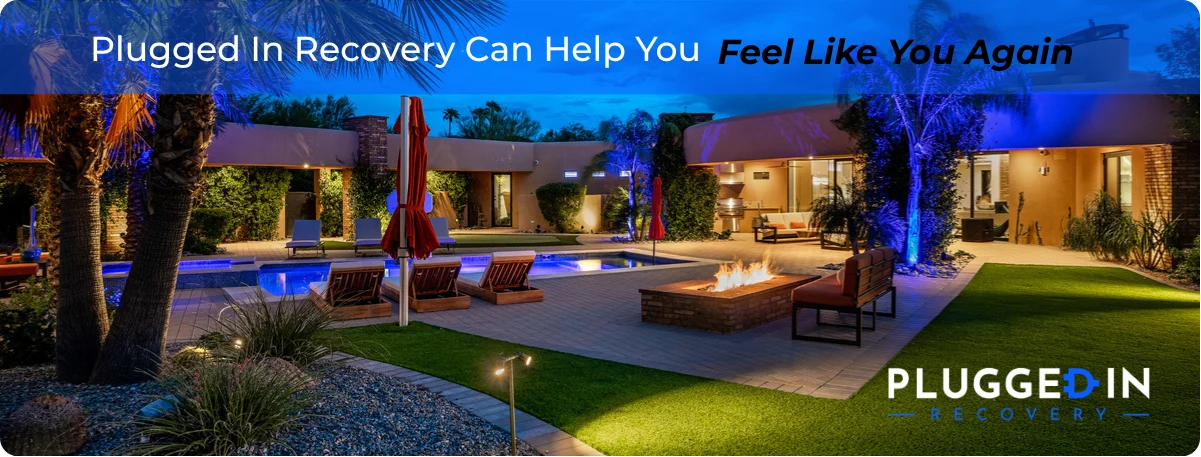
Resort-style 5,725 sq ft Scottsdale residence |
Community-oriented Chandler facility designed for real-world reintegration |
| Insurance |
Most major insurance is accepted |
Most major insurance is accepted |
| Intake |
Same-day intake available |
Same-day intake available |
Both programs offer a confidential admissions conversation with no commitment required to start luxury alcohol rehab in phoenix.
You Recognized Some of These, Here Is What to Do Next
People who are asking, “am I an alcoholic” are often further along in recognizing a pattern than they realize. The question does not usually appear without something behind it.
A clinical assessment with an admissions counselor takes about an hour. It is confidential. It is not a commitment. It gives you an honest picture of where things actually stand based on your specific pattern, not a self-assessment checklist.
If you or someone you care about is ready, the team at Plugged In Recovery’s is available to start that conversation. Calls are confidential, same-day intake is available, and luxury alcohol rehab in Phoenix does not have to mean stepping away from everything that matters to you.
FAQ
What are the signs of being an alcoholic?
The signs of Alcohol Use Disorder include drinking more than you intended, failed attempts to cut back, strong cravings, needing more alcohol to feel the same effect, withdrawal symptoms when you stop, and continuing to drink despite the apparent problems.
A clinical diagnosis requires at least 2 of 11 criteria within 12 months. Even 2 or 3 is enough to consider a conversation with a professional with just a simple insurance verification.
Can you be an alcoholic if you only drink on weekends?
Yes. Alcohol Use Disorder once again is not defined by how often you drink. Someone who only drinks on weekends but regularly exceeds their own limits, cannot stop once they start, or feels physical effects during the week, can still meet the clinical criteria for AUD.
How do I know if I drink too much?
If you regularly drink more than you planned, have tried to cut back and could not, or find that drinking is affecting your sleep, your mood, your work, or your relationships, those are signs worth paying attention to.
What is the difference between a heavy drinker and an alcoholic?
A heavy drinker consumes alcohol above recommended limits but can generally cut back when they choose to. Someone with Alcohol Use Disorder has lost meaningful control. The difference is not how much someone drinks. It is whether they are able to manage their drinking the way they intend to.
Plugged In Recovery Can Help You Feel Like You Again
Whether you’re just starting to question your relationship with substances or you’ve been in the cycle for years, Plugged In Recovery is here to help you break free.
With private, resort-style rehab in Scottsdale and outpatient care in Chandler, our team meets you where you are, with respect, expertise, and personalized care that works
Contact Us
High functioning alcoholic treatment becomes necessary when maintaining external success masks an escalating dependency on alcohol. Successful professionals will often balance careers and family life while they quietly increase their consumption, making early recognition difficult.
This underlying struggle remains hidden until severe internal exhaustion or relationship strain forces a confrontation with the reality of the addiction.
Outpatient care can give you an optimal pathway to address dependency and burnout without disrupting professional responsibilities, changing the focus from basic stabilization to long-term neurobiological recovery.
Intake Patterns of High Functioning Alcoholics
On first contact with Plugged In Recovery, their professional protective layers are usually fully intact. They may attempt to manage their clinical intake like a standard business transaction, maintaining a polished exterior and a calm demeanor. As a clinical team, we look past that presentation and usually find a severe level of internal exhaustion.
During these initial assessments, the masked reality surfaces quickly. Laura Zsako, our primary residential therapist, often observes this dynamic during intake processes, noting that “anxiety is coming out” once the chemical buffer is removed. Initiating high functioning alcoholic treatment requires an outpatient program built specifically to address these subtle presentations and very specific needs.
We don’t force a rock bottom narrative, instead we address the unique pressures that drive an individual to self medicate.
Biological Changes in High Functioning Alcoholics
Alcohol is deeply normalized in corporate and high pressure environments as a tool for networking and decompressing after a long day. However, the neurobiology of the brain quietly shifts beneath the surface over time. The individual begins relying on alcohol to downregulate their central nervous system. To combat a constant influx of cortisol, the professional uses alcohol as a chemical sedative.
Eventually, the brain responds by reducing its own natural production of calming neurotransmitters. Without evening alcohol, the individual experiences a severe baseline of physiological panic.
They’re no longer drinking for pleasure; they’re drinking to stave off chemical anxiety. The patient cannot articulate the fear.
As Laura explains to clients processing this confusion, “When they’re high-functioning, they’re trying to overachieve. So what happens clinically? They mask anxiety. They mask depression.”
If you can’t relax without a drink anymore, that’s dependence, not stress. Call our clinical team and find out what treatment looks like. The conversation is confidential.

Recognizing the Signs of High Functioning Alcoholism
The contrast between the public image and the private struggle is why intervention is so complex.
High performing individuals are experts at presenting a pristine version of themselves to the world.
External Facade vs. Internal Reality
Identifying when an individual needs high functioning alcoholic treatment involves looking past public achievements. We must look at the divide between what the public sees and what the clinician treats.
| The External Facade |
The Internal Clinical Reality |
| Never misses a morning meeting or presentation. |
Relies on immense physical energy to mask morning tremors. |
| Uses alcohol primarily at high level networking events. |
Drinks extensively in isolation after the household is asleep. |
| Maintains a high degree of physical fitness. |
Suffers from severe sleep fragmentation and chronic exhaustion. |
| Defends alcohol use as an earned professional reward. |
Panics internally if their preferred substance is unavailable. |
Evaluating this pristine facade requires clinical skepticism. True recovery requires breaking down that clean exterior to address the profound exhaustion underneath. An analytical mind can complicate recovery because, as Laura points out, “that over-analization for themselves can cause them to feel like a burden”.
What Partners Observe at Home
For the spouse, recognizing the need for clinical intervention is isolating. The partner doesn’t see a stumbling, incoherent person.
They see a highly structured, rigid routine centered entirely around alcohol access. The signs at home are subtle but highly progressive.
The high functioning alcoholic relies entirely on their partner to uphold the external image. During family intake sessions, we see how heavily this impacts the family dynamic. Laura notices quickly that a “depressive mood is coming out”. Spouses researching options for a luxury rehab in Phoenix at often realize that waiting for a catastrophic failure is dangerous.
Treatment is most effective when initiated during this exact window of early recognition. Validating this hidden pattern is the critical first step. Laura emphasizes the importance of a acknowledgement at intake, “I validate them without assuming that they’re fine, because I sit across from clients and I ask them how are you doing? How are you feeling? And they say, oh, I’m fine. I ask them then why are you here?”
If you recognize these patterns in your partner, call us. We’ll tell you how to start that complex conversation and what comes next. The call is confidential and commits you to nothing.
Why Traditional Rehab Fails Professionals
The structure of traditional treatment poses a significant barrier for successful professionals. They value control, autonomy, and privacy above all else.
Consequently, entering a standard residential facility, and disconnecting from business responsibilities, is a nonstarter. It threatens the very success they use to justify their drinking.
This demographic demands an environment that respects their professional obligations while still delivering rigorous clinical intervention.
They prioritize discretion and flexibility, and rightly so, as Laura notes, “Privacy and safety are huge; having that safety with our lower numbers really helps them to be more vulnerable and feel safe.”
Comparing Treatment Options
Choosing the right modality for high functioning alcoholic treatment depends heavily on the person’s professional obligations. Plugged In Recovery operates an outpatient luxury rehab in Phoenix that perfectly accommodates demanding schedules.
| Treatment Feature |
Traditional Inpatient Model |
Plugged In Recovery Professional Model |
| Professional Autonomy |
Requires a total leave of absence from work. |
Allows the client to maintain their career. |
| Schedule Flexibility |
Rigid facility lockdown with zero outside contact. |
Flexible evening clinical blocks tailored to working hours. |
| Real World Application |
Coping skills are practiced in an isolated bubble. |
Coping mechanisms are tested immediately in stressful environments. |
| Privacy Levels |
High risk of exposure due to sudden absence. |
High discretion maintained as the individual remains visible. |
By providing evening intensive outpatient programs, the clinical team allows the individual to practice their new coping mechanisms directly. In our clinical experience, Laura emphasizes that “high-functioning clients often appreciate structure”.
Clinical Interventions at Plugged In Luxury Rehab
Treating the individual requires moving far beyond basic abstinence protocols. The alcohol is merely the visible symptom of a disregulated nervous system.
At our specialized luxury rehab in Phoenix, we integrate evidence based modalities to treat the whole person. Laura emphasizes digging beneath the surface, noting, “I try to dissect everything clinically as much as I can”.
We integrate Dialectical Behavior Therapy to teach distress tolerance. As Laura confirms, “DBT is effective for individuals with substance use”. In every session, the goal is clear: “I want to build that emotional stability with coping skills”.
Our team also utilizes Eye Movement Desensitization and Reprocessing to handle deeper burnout. Laura observes that “EMDR will help them get out of being stuck”. These modalities work together seamlessly to create sustainable change. As our therapists confirm, “DBT and EMDR are like best friends”.

A Call is Just a Conversation
Seeking high functioning alcoholic treatment doesn’t mean sacrificing a career. The fear of disrupting a carefully built lifestyle often keeps individuals trapped in silent exhaustion. At Plugged In Recovery we understand this struggle. You don’t need to wait for a catastrophic loss to justify seeking a healthier baseline, there isn’t a right moment
Connecting with a premier luxury rehab in Phoenix allows families to plan a secure path forward. Reaching out doesn’t mean signing away your responsibilities.
A call to our clinical team is simply a confidential conversation about your choices. We can help you build a structured, discreet plan that prioritizes your neurological health.
Laura Zsako Q&A
What surprises patients most when they start outpatient rehab?
Laura: The level of structure and accountability. A lot of people think outpatient means dropping in for a chat when they feel like it. When they realize they are expected to be here on time, participate actively, and engage in the clinical work, it shifts their perspective. They realize this is serious medical and psychological care, just delivered flexibly.
How do you handle patients who are working full-time?
Laura: We build the schedule with working professionals in mind. We offer different tracks and group times so people don’t have to choose between their livelihood and their recovery. The goal of outpatient is to help you integrate recovery into your real life, and keeping your job is often a big part of that stability.
What role do families play in the outpatient process?
Laura: Families are critical. We incorporate family therapy sessions because addiction doesn’t just happen to the individual, it happens to the whole household. We help spouses and parents understand boundary setting, enabling behaviors, and how to actually support their loved one without burning themselves out.
How do you measure progress in an outpatient setting?
Laura: We look at functional milestones. Are they maintaining sobriety? Yes, that’s the baseline. But we also look at whether their sleep has improved, if they are communicating better with their spouse, and if their anxiety scores are dropping. Progress is measured by how much of their life they are getting back.
Frequently Asked Questions
Can you be an alcoholic and still be highly successful in your career?
Yes. Professional success doesn’t prevent neurobiological dependence. Many individuals maintain intense careers while their physical reliance on alcohol escalates. They use their external success as proof that they don’t have a problem. This masking hides the severe internal exhaustion required to conceal their escalating consumption from peers.
What are the first signs of a high functioning alcoholic?
Early signs include drinking before social events to establish a baseline and feeling intense irritability if alcohol is unavailable. Severe sleep fragmentation is another massive indicator. The individual will display a rigid adherence to drinking routines and an increasing tolerance requiring more consumption to achieve relief.
How do you approach a highly successful spouse about their drinking?
Approach the conversation during a calm and completely sober moment in the morning. Focus entirely on specific behavioral observations rather than character judgments. Express concern for their physical exhaustion and stress levels. Frame the discussion around seeking professional support for burnout rather than accusing them of personal failure.
Does high functioning alcoholic treatment require a leave of absence?
Not always. While some severe medical detoxes require a brief absence, many clinical programs offer outpatient structures designed specifically for working professionals. Plugged In Recovery provides intensive therapy during evening hours. This allows the individual to maintain career responsibilities while actively addressing their neurobiological health safely.
Self Assessment Quiz
| Self Assessment Question |
Yes (1 Point) |
No (0 Points) |
| Do you find yourself planning your evening around when you can have your first drink? |
| Have you ever felt the need to drink prior to attending a networking event to feel prepared? |
| Does your partner frequently comment on your irritability before you have had a drink? |
| Do you use your professional success to justify your current level of alcohol consumption? |
| Do you frequently wake up in the middle of the night with a racing heart or severe anxiety? |
| Do you intentionally avoid discussing your exact alcohol intake with your primary care physician? |
0 to 1 Points (Low Risk): Your current routines don’t indicate a high level of neurobiological dependence. Continue to monitor your stress levels and ensure you have healthy coping mechanisms.
2 to 4 Points (Moderate Risk): You’re displaying patterns consistent with early stage dependence. Exploring outpatient support now can prevent further escalation and protect your career.
5 to 6 Points (High Risk): Your responses strongly indicate a high functioning dependence pattern. A confidential clinical conversation is highly recommended to explore structured high functioning alcoholic treatment options immediately.
Spouse Observation Checklist
- Recognizing the “Shift in Your Partner”
- Noticeable increase in alcohol tolerance over the last twelve months.
- Intense defensiveness when the topic of drinking is casually mentioned.
- Drinking occurs in isolation or after the rest of the household is asleep.
- Consistent failure to remember conversations that occurred late in the evening.
- Visible morning anxiety that only subsides as the workday progresses.
Contact Us
Yes, you can die from alcohol withdrawal. It is one of the only forms of substance withdrawal that carries a direct risk of death, and that risk is highest in heavy, daily drinkers who stop suddenly without medical support.
The most dangerous stage is called delirium tremens (DTs), which affects around 3 to 5 percent of people going through withdrawal and carries a mortality rate of up to 15 percent without treatment.
For anyone considering luxury alcohol rehab in Phoenix or simply trying to stop drinking safely, Plugged In Recovery is the right place to start.
Why Alcohol Withdrawal Can Be Fatal
Most withdrawal experiences are uncomfortable, not life-threatening. Alcohol withdrawal is different because of what chronic drinking does to the brain over time.
When someone drinks heavily for months or years, the brain adapts by increasing its own excitatory activity to compensate for alcohol’s sedating effect. Remove the alcohol suddenly, and that excitatory system has nothing to balance it.
The result is a nervous system running in overdrive, which in severe cases produces seizures, cardiovascular instability, and delirium tremens.
This is why asking “can you die from alcohol withdrawal” is not an overreaction. The danger is not the discomfort of stopping. It is the neurological crisis that can follow in people with significant physical dependence.

The Three Stages of Alcohol Withdrawal
Withdrawal does not happen all at once. It follows a predictable timeline, and knowing where the risk peaks matters.
| Stage |
Timing |
What Happens |
| Stage 1 – Mild |
6 to 24 hours after last drink |
Tremors, sweating, nausea, anxiety, elevated heart rate. Uncomfortable but rarely dangerous on its own. |
| Stage 2 – Moderate |
24 to 72 hours |
Hypertension, confusion, risk of seizures. This is when medical monitoring becomes critical. |
| Stage 3 – Severe |
48 to 96 hours, sometimes up to 7 days |
Delirium tremens risk peaks. Hallucinations, severe agitation, hyperthermia, cardiovascular instability. This stage carries the highest mortality risk. |
Post-Acute Withdrawal Syndrome (PAWS) can follow, lasting weeks to months, with persistent anxiety, sleep disruption, and mood changes. PAWS is not acutely life-threatening but significantly increases relapse risk without continued clinical support.
Who Is Actually at High Risk
This is where most articles leave the reader more frightened than informed. Not everyone who stops drinking faces the same level of danger and being specific about who is at elevated risk is more useful than treating every reader as a worst-case scenario.
According to clinical guidance from the National Center for Biotechnology Information, the factors that significantly increase the risk of severe withdrawal, including seizures and DTs, are:
- A long history of heavy daily drinking, typically years rather than months
- Previous episodes of alcohol withdrawal, particularly any prior seizures during withdrawal
- Prior history of delirium tremens
- Older age combined with heavy alcohol use
- Co-occurring health conditions affecting the liver, heart, or kidneys
Someone who drinks heavily on weekends, or who has been drinking heavily for a shorter period without physical dependence, faces a very different risk profile than a person with a decade of daily heavy drinking.
If you are unsure which category applies to your situation, you can speak with a clinical team before to decide on the next steps.

What Medical Supervision Actually Changes
The mortality risk associated with delirium tremens drops from up to 15 percent without treatment to under 1 percent with proper medical care. That is not a marginal improvement, it’s the difference between a manageable medical process and a life-threatening one.
Medically supervised detox works by monitoring the withdrawal timeline in real time and intervening before dangerous symptoms escalate because you can die from alcohol withdrawal.
This includes medication to reduce seizure risk, management of cardiovascular instability, hydration support, and around-the-clock clinical oversight during the peak risk window.
At Plugged In Recovery, the alcohol rehab program in Phoenix is built around exactly this – clinical monitoring through the stages where risk is highest, with same-day intake available for people who need to start without delay.
|
Residential – Scottsdale |
Outpatient – Chandler |
| Who it is for |
People with significant physical dependence who need 24/7 medical oversight to stop safely |
People with lower-severity dependence who can manage withdrawal in a structured non-residential setting |
| Level of care |
24/7 clinical monitoring, private 10-bed facility, same-day intake |
Structured therapy and clinical support while staying connected to daily responsibilities |
| Insurance |
Most major insurance accepted |
Most major insurance accepted |

If You Are Thinking About Stopping, Start Here
The question “can you die from alcohol withdrawal” is often asked by someone who is either already in the early stages of stopping or who is trying to plan a safe way out. Either way, the answer points in the same direction: the risk is real, specific, and almost entirely preventable with the right support in place.
A quick chat with the admissions team at Plugged In Recovery takes about an hour, is confidential, and gives you an honest clinical picture of the level of support your situation actually requires.
Luxury alcohol rehab in Phoenix does not have to mean an extended commitment and can begin with a simple insurance verification.
Same-day intake is available. The call is confidential. No commitment is required to start.
FAQ
What are the chances of dying from alcohol withdrawal?
For most people, withdrawal is uncomfortable but not fatal. The risk comes from delirium tremens, which affects 3 to 5 percent of people and carries a mortality rate of up to 15 percent without medical treatment. With proper supervision, that rate drops below 1 percent.
What does alcohol withdrawal feel like before it becomes dangerous?
Early withdrawal feels like a severe case of the flu with intense anxiety – shaking, sweating, nausea, and a racing heart within the first 6 to 24 hours. These symptoms can escalate quickly in people with significant physical dependence. The transition from uncomfortable to dangerous can happen within hours.
How long does alcohol withdrawal last?
Acute symptoms begin within 6 hours of the last drink and peak around 48 to 72 hours. Most people see the worst symptoms resolve within 5 to 7 days. Post-Acute Withdrawal Syndrome can follow for weeks to months with ongoing anxiety, sleep disruption, and mood changes.
Is it safe to detox from alcohol at home?
For anyone with a long history of heavy daily drinking, prior withdrawal seizures, or previous DTs, detoxing at home carries a serious risk. If you are uncertain about your risk level, speak with a clinical team before stopping, not after symptoms have already started.
Plugged In Recovery Can Help You Feel Like You Again
Whether you’re just starting to question your relationship with substances or you’ve been in the cycle for years, Plugged In Recovery is here to help you break free.
With private, resort-style rehab in Scottsdale and outpatient care in Chandler, our team meets you where you are, with respect, expertise, and personalized care that works.
“Anxiety doesn’t have to run the show,” Laura says. “And you don’t have to figure it out alone.”
Contact Us
Luxury alcohol rehab in Phoenix gets misread all the time. People see the pool and assume the treatment is soft. The truth is the opposite: the comfortable house is just where the work happens, and the work fills the whole day.
In this article, Laura Zsako, primary residential therapist at Plugged In Recovery, walks through what actually happens inside our 10-bed Scottsdale residence: the daily schedule, what comes up after the drinking stops, what happens if someone relapses, and how we protect your privacy and your job while you get help.
If you are looking at luxury alcohol rehab in Phoenix for yourself or someone you love, this is the honest version.
What a Day Here Actually Looks Like
Families ask Laura about this constantly. “They’re like, my man, I should come to your facility! It’s a resort!” Her answer is always the schedule: “Even though it looks pretty, we keep the clients busy from 7:30 in the morning until 8:30 at night.”
| Time |
What happens |
| 7:30 am |
Chef-prepared breakfast, check-in or process group |
| Morning |
Clinical sessions: CBT skill-building, psychoeducation |
| Midday |
Recovery groups, nursing groups, life skills |
| 3:30 to 4:30 pm |
Free hour: gym, pool, cold plunge, red light sauna |
| Afternoon |
Individual therapy, relapse prevention, art therapy |
| 8:00 pm |
Evening review |
| 8:30 pm |
Day ends |
So if your loved one hasn’t called in a couple of days, this is usually why. As Laura puts it: “They’re not just tanning all day.”
That schedule is part of our luxury residential program, where stays typically run 30 to 90 days.

Why Only 10 Beds
Laura has worked at facilities with 50 to 100 people in a group. She’s blunt about the difference: “Everybody knows everybody. Somebody sneezes, and they’re like, is Sarah okay?”
A house this small changes three things:
- You can’t hide. In a group of 100 you can stay silent for weeks. In a group of 10, your peers notice by day two, and in Laura’s groups they call each other out in a healthy way.
- Staff actually know you. If your sleep falls apart, Laura is talking to the director of nursing that same day, not writing a note nobody reads.
- It feels safer, not more exposed. “The majority of the clients that come to me say, Laura, I feel safe here because it’s low-numbered.” Two beds per room, three on one female room. Lower numbers, faster trust.
“I’m Only Here for Alcohol”
Laura hears this at almost every intake. She also knows what usually happens next.
The 14-day mark
“Usually around that 14th to 15th day,” as the alcohol clears the body, whatever was underneath starts showing up. Anxiety. Depression. Old trauma. Sometimes it looks like isolating, crying out of nowhere, a panic attack, or sleep falling apart. Clients tell her “I’m not here for anxiety,” and then their own body says otherwise.
This is normal, and it’s actually the point. The National Institute on Alcohol Abuse and Alcoholism confirms what Laura sees daily: anxiety and depression very commonly travel with alcohol, and treating them together works better than treating either alone.
Which came first, the drinking or the anxiety?
A lot of people arrive stuck on this question. Laura’s approach: it doesn’t need to be answered on day one. “I’m all about starting points.” Sometimes the job of residential is simply to stabilize you for 30 days. Then, working with the medical team, she starts untangling it: when did the sleep problems start, what was happening six months ago, what does anxiety even mean to you personally, not the textbook version.
That’s what dual diagnosis treatment looks like in practice at our alcohol rehab program: a therapist and a medical team working on the same person at the same time.

Will Anyone Find Out I’m Here?
For a lot of professionals, this is the real barrier. Not the cost. Not the time. The fear that someone at work finds out.
Laura’s answer is simple: nobody hears anything without your written permission. “I cannot talk to family, friends, coworkers unless they sign a release of information.” No release, no conversation. She’s had people show up at the door asking for a client and her answer is the same every time: “I can’t confirm or deny that.”
She’s protected CEOs, athletes, and people in active legal situations the same way. If confidentiality is what’s been keeping you or your loved one from calling, that concern is handled before anything else happens.
What Happens After the 30 Days
Laura is honest about this one: “Going from residential back home, not the best idea. They fight me on it all day every day.” Someone will tell her, “I just want to do three days a week, I need to go to work.” Her answer: “I need you alive.”
The training wheels test
This is how Laura explains levels of care to every client, and it’s the clearest version we’ve heard:
- PHP is riding with training wheels on. Five days a week, 9:00 to 3:30, at our Chandler campus. You get a lot of support while you build stability. If she asks “are you ready to have the training wheels off?” and the honest answer is no, PHP is where you belong, and that’s okay.
- IOP is the training wheels off, with someone right next to the bike. Three days a week, half days. More independence, but still guidance and accountability. You’re ready for IOP when you’re stable, you can use your coping skills outside of treatment, and you have a safe place to live.
- Home is riding alone. You get there by earning it, not by rushing it.
The step down isn’t a handoff to strangers, either. The people who teach at our Scottsdale residence also work at the Chandler outpatient campus, and clients often move over together with peers from the house. In Laura’s words, “now we’re flowing.”
If a relapse happens
Laura’s first question is never about what went wrong. It’s “Are you safe?” She stays away from the word failure entirely, because “they already feel guilty, they already feel like they failed.”
A client who came back recently told her, “I knew that you would take care of me, Laura, not make me feel bad.” Her response: “You’re alive. That’s our starting point.” Then the training wheels go back on, and this time the structure looks a little different. That’s not punishment. That’s the plan working.
What Long-Term Sobriety Actually Takes
We asked Laura what she wishes every client understood before leaving. Her answer, from someone with 13 years of her own sobriety:
- Consistency with recovery support, whatever that looks like for you: meetings, 12-step, SMART Recovery
- Ongoing therapy (“I have a therapist and I’m a therapist”)
- Structure and routine
- A social network that isn’t your old drinking network
- A relapse prevention plan you actually use
- Purpose
And the line worth putting on the wall: “Recovery isn’t just about quitting drugs or alcohol. It’s about creating your life in a healthier manner, more fulfilling, so you no longer need the substances to cope.”
Luxury Alcohol Rehab at Plugged In Recovery
Ask Laura what Plugged In actually is and she won’t start with the amenities. “This is a very family atmosphere where we want to see them succeed.
We celebrate when they get that job. We celebrate when they get the training wheels off.” She still gets the emails: clients who landed the job, clients who got custody of their kids back. “If they’re winning, we’re winning.”
That’s the culture inside our Scottsdale residence: a 5,725-square-foot, 10-bed home with private rooms, Tempur-Pedic beds, a pool, a stocked gym, a red light sauna, and chef-prepared meals.
The comfort is real, and so is the clinical day inside it: CBT, DBT, individual therapy, and medical support, with a step-down path through PHP and IOP at our Chandler campus so the support doesn’t end when the 30 days do.
Laura will tell you the last part herself: “This is not a job for me. I get to come and be on their journey every single day.”
We accept most private insurance, and same-day intake is available. One confidential call answers what a website can’t: (602) 527-8096 .
Ask the Therapist
People see the pool and the sauna. What do they misunderstand about the clinical work?
“I get that question all day, every day from family members. They’re like, my man, I should come to your facility! It’s a resort! But even though it looks pretty, we keep the clients busy from 7:30 in the morning until 8:30 at night. They have group therapy, recovery groups, in-house meetings, individual therapy, and evening review at almost 8:00 at night. A lot of times I’ll get family members go, well, they’re at a resort, why haven’t I heard from my loved one? And I say, let me tell you, they’re not just tanning all day. They have an hour, from 3:30 to 4:30, that’s their free time. But within this beautiful facility we’re doing some really strong clinical work, where we get very, very vulnerable together.”
Does the 10-bed model actually change how people recover?
“I’ve worked at other facilities where there’s been 50 to 100 people in a group setting. I think having 10 beds is awesome because everybody knows everybody. It’s very small town, even though we’re in the city in Scottsdale. Somebody sneezes, and they’re like, is Sarah okay? Having that smaller niche gives them the opportunity to open up a little bit more, to help each other, hold each other accountable. It creates a close-knit therapeutic community, because it’s 10 of us. Group therapy is about you guys, not me talking.”
What do you tell someone who’s afraid their employer will find out?
“I cannot talk to family, friends, coworkers unless they sign a release of information. That’s first and foremost. I’ve worked with athletes, CEOs. Trust me, people could ask me questions until I’m blue in the face and I’m like, I can’t confirm or deny that. It’s having that button of having their back and their protection.”
Someone is comparing luxury programs right now. What should they look for?
The structure behind the setting. Ask what happens between breakfast and lights out, and who is running the therapy. At Plugged In Recovery, the answer is a full clinical day at our 10-bed Scottsdale residence, with CBT and DBT-based groups, individual therapy, and medical support under one roof, and it doesn’t end at discharge. Our continuum steps clients down into PHP and then IOP at our Chandler campus, with the same staff and often the same peers, so the structure that got you stable is the structure that keeps you that way.
Frequently Asked Questions
What makes a rehab “luxury”?
Luxury rehab means a high-end residential setting, private or semi-private rooms, upscale amenities, and low client-to-staff ratios, combined with full clinical treatment. The setting makes it easier to stay and focus. The therapy, medical support, and daily structure are what actually treat the addiction.
How much does luxury rehab in Phoenix cost?
It depends on program length, level of care, and your coverage. Plugged In Recovery accepts most private insurance, which often covers a significant portion of residential treatment. The fastest way to a real number is a confidential insurance verification, which takes one call.
How long is residential alcohol treatment?
Most stays run 30 to 90 days depending on clinical need, with 30 days as a common starting point for stabilization. Stepping down through PHP and IOP afterward is consistently linked to stronger long-term outcomes than a single short stay.
Is luxury rehab more effective than standard rehab?
The setting doesn’t treat addiction; the clinical program does. Where luxury and small-census models tend to win is retention: people stay longer, open up sooner, and build stronger relationships with staff, and all three of those improve outcomes.
Do clients get free time at a luxury facility? (From our interview)
Yes, but less than families expect. At our Scottsdale residence, programming runs 7:30 am to 8:30 pm with one free hour from 3:30 to 4:30 for the gym, pool, or rest. As our therapist Laura Zsako tells families who assume it’s a resort: “They’re not just tanning all day.”
When to Reach Out
If stress is no longer temporary, and it’s starting to shape how you eat, sleep, think, or function, it’s time to reach out. You don’t have to wait until it’s a crisis.
Plugged In Recovery offers luxury treatment programs that support both addiction and mental health challenges, including anxiety disorders. We’re here to help you feel grounded, understood, and supported every step of the way.
Contact Us
Stopping cold after a long stretch of heavy drinking is one of the few withdrawals that can actually kill you. That’s not scare talk. When alcohol has been doing part of your nervous system’s job for months or years, yanking it away can set off seizures or delirium tremens. Below: the first week of withdrawal, day by day, why white-knuckling it at home is risky, and where alcohol detox in Phoenix fits at Plugged In Recovery.
Supervision sounds like a formality. It isn’t. Someone trained is watching your heart rate and blood pressure, and they know which small signs tend to come right before a big problem.
The Reality of Alcohol Withdrawal
Most people expect quitting to test their willpower. They don’t expect how hard it hits the body. After months or years of heavy drinking, the body has adjusted to a steady supply of a depressant, which makes withdrawal a medical event, not a test of character.
Here’s what’s going on physically. Alcohol slows the brain down, and after months or years the brain pushes back to compensate. Take the alcohol away and that push is suddenly unopposed, which is where the shakes, sweats and racing heart come from. Many families also don’t know supervised detox is often covered by insurance.
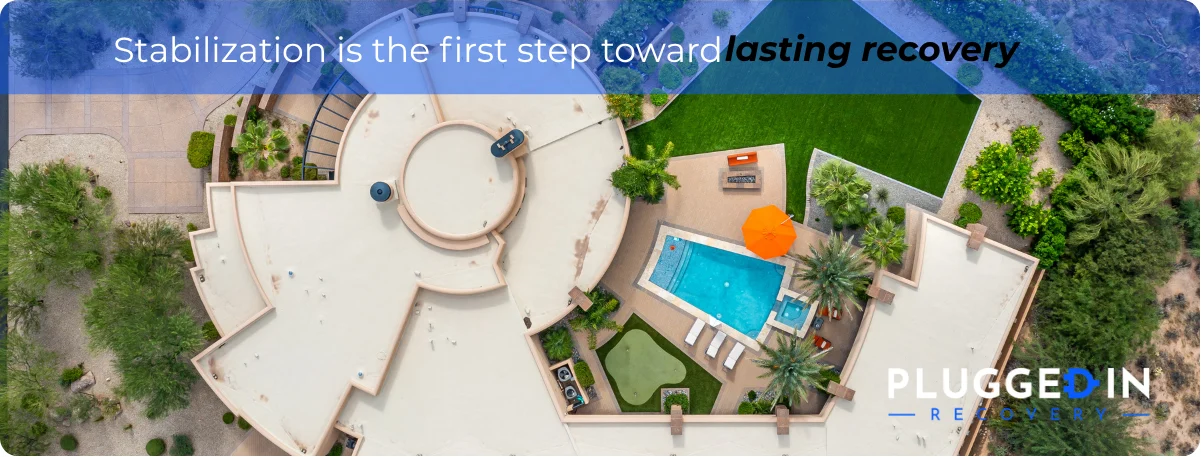
The Critical 72 Hour Risk Window
Expect the first shakes or sweats within a few hours of your last drink. Day three is usually the worst of it. If seizures happen, it’s mostly between hour 8 and hour 48, and delirium tremens, which is rarer, can hit anywhere from day three to day eight. A plan for the first night isn’t enough. You need one for the week. Not sure where to start? It’s only a conversation away.
Timeline of the First Week
Understanding this rapid timeline helps families recognize why continuous clinical monitoring is not optional.
| When |
What can happen |
What care looks like |
| First hours to 24 hours |
Tremors, sweating, anxiety, racing heart, trouble sleeping |
Regular checks of vital signs and symptoms |
| 8 to 48 hours |
Main window for withdrawal seizures |
Close observation, medication when needed |
| Around 72 hours |
Symptoms usually at their peak |
Ongoing monitoring and symptom relief |
| Day 3 to day 8 |
Risk window for delirium tremens: confusion, fever, severe agitation |
Emergency medical care |
Source: Alcohol Withdrawal Syndrome, StatPearls (NIH National Library of Medicine)
Not everyone goes through every stage. The problem is that nobody can predict who will.
Why Detoxing Alone at Home Is Risky
Plenty of people try to quit cold turkey in their own bedroom, often to avoid the stigma of checking into a facility. For mild withdrawal with no history of seizures or delirium tremens, doctors sometimes manage detox at home, with a support person and regular check-ins. Without that medical plan, though, nobody is there to catch warning signs early. A seizure or a sudden spike in blood pressure isn’t something you can tough out, and families should know the real answer to whether you can die from alcohol withdrawal.
Comparing Detox Environments
The setting matters too. Plugged In is a luxury alcohol rehab in Phoenix, and our residences are small and private, so nobody gets lost in the shuffle at a vulnerable time. That said, it’s no vacation. The days are full, with individual therapy, clinical groups and recovery meetings.
| Care Feature |
Unsupervised Home Detox |
Supervised Clinical Detox |
| Vital Monitoring |
None. You must rely on subjective feelings of illness. |
Continuous tracking of blood pressure, heart rate, and temperature. |
| Seizure Response |
Relying on family to call emergency services in time. |
Immediate pharmacological intervention by trained medical staff. |
| Comfort Levels |
Extreme physical pain, nausea, and severe psychological panic. |
Symptoms are medically managed using safe tapering protocols. |
How Plugged In Supports Detox
Our detox support has one job: get you through withdrawal safely and into treatment without a gap in care. Admissions helps plan the detox stage, lines up the right care, and brings you into residential treatment once you’re stable. Medication management is there if you need it, and the team includes a Medical Director and a Director of Nursing.
Detox takes care of the body. It doesn’t fix what drove the drinking, which is why the plan for what comes next matters as much as the first 72 hours.
Planning a Safe Detox
Families weighing whether to manage withdrawal at home or seek professional help often realize that waiting for a catastrophic medical event is a risky strategy. Supervised detox makes that danger far easier to catch and manage.
If you or a family member are planning to stop drinking, please reach out to our team before taking any sudden action. We can help you build a structured, medically sound plan to safely navigate the initial detox window.
Ask the Clinical Director
Does detox fix the drinking problem?
“If I have heart disease, and my doctor tells me I need to exercise, get my rest, and stop eating bacon double cheeseburgers, and I stop doing that, and I get well, but 6 months later I start to move back in the direction of eating bacon double cheeseburgers and not sleeping, and not exercising, I’m going to have a relapse.”
Darren Lee, M.A., LPC, Clinical Director
How long does the brain take to recover after detox?
“It’s not really until about a year and a half to two years that we’re starting to see the brain, the structure and function, behave similarly to how it did prior to… pre-addicted brain states.”
Darren Lee, M.A., LPC, Clinical Director
What should happen after detox?
“We need to get people into a community of recovering people surrounded by accountability, surrounded by language, messaging, and behavior that promotes ongoing abstinence and recovery.”
Darren Lee, M.A., LPC, Clinical Director
Frequently Asked Questions
How long does alcohol detox take?
Plan on about a week. Day three tends to be the hardest, and delirium tremens, when it happens, can still turn up near the end of that first week. Sleep usually takes longer to settle, sometimes a few weeks, and some low-level anxiety can hang around too.
Can I detox from alcohol at home safely?
It depends on how bad the withdrawal is. A doctor may manage a mild case at home with someone checking in on you. But if you’ve had a seizure or delirium tremens before, have other health problems, or drink heavily every day, please don’t do this alone.
What happens after detox is finished?
Your body is clear of alcohol, but whatever drove the drinking is still there. Most people go straight into residential or outpatient care. That’s where therapy, relapse prevention and an aftercare plan start doing the longer work.
Will I be heavily medicated during detox?
No. The medications are there to keep you safe, mainly to head off seizures and take the edge off symptoms, and the doses come down as withdrawal eases. You should be steady and clear enough to start treatment, not knocked out.
Self Assessment Quiz
Physical Dependence Risk Assessment
| Self Assessment Question |
Yes (1 Point) |
No (0 Points) |
| Do you experience morning tremors that only stop after consuming alcohol? |
|
|
| Have you ever tried to stop drinking suddenly and experienced a racing heart or severe sweating? |
|
|
| Do you feel intense physical anxiety when you go more than a few hours without a drink? |
|
|
| Have you ever suffered a seizure when attempting to reduce your alcohol intake? |
|
|
| Are you currently planning to quit drinking cold turkey at home by yourself? |
|
|
- 0 to 1 Points (Low Risk): Your physical dependency indicators are low. However, psychological dependence may still be present. Speak with a professional about healthy cessation strategies.
- 2 to 3 Points (Moderate Risk): You are displaying signs of physical dependence. Stopping abruptly carries medical risks. A supervised clinical evaluation is highly recommended before you stop drinking.
- 4 to 5 Points (High Risk): Your physical dependence is severe. Attempting to stop drinking at home is incredibly dangerous and potentially fatal. Please contact a medical detox facility immediately to arrange for supervised care.
This is not a diagnosis. If you scored 2 or more, talk to a doctor before you stop drinking.
Preparing for a Safe Clinical Detox
- Contact a medically supervised facility to discuss intake protocols.
- Do not attempt to rapidly taper your alcohol intake without medical guidance.
- Pack comfortable, loose fitting clothing for your stay.
- Bring a complete list of any current prescription medications.
- Arrange for a secure transition from the detox facility directly into a rehabilitation program.
Contact Us