

Is Rehab Worth It?
Is rehab worth it? For most people with a moderate to severe drinking or drug problem, yes. Addiction treatment works about as well as care for other long-term conditions like high blood pressure and asthma.
Whether it pays off for you comes down to fit: the right level of care, real treatment for whatever sits underneath the substance use, and a plan for the months after you leave.
Most people asking this already know something has to change. The doubt is about the money, the weeks away from work, and whether any of it will hold once they’re back home. Each of those worries has a straight answer.
Key takeaways
- A relapse means adjusting the plan, not that treatment failed.
- Rehab pays off when the level of care fits your needs.
- Be wary of programs with no clear therapies or aftercare plan.
- Marketplace insurance plans must cover addiction treatment.
Does Rehab Work? What the Research Says
A relapse after treatment can feel like proof that it didn’t work. The research points the other way.
A widely cited study in JAMA found that 40 to 60% of people treated for alcohol or drug dependence return to use within a year. That’s close to the 50 to 70% of people with hypertension or asthma whose symptoms come back each year.
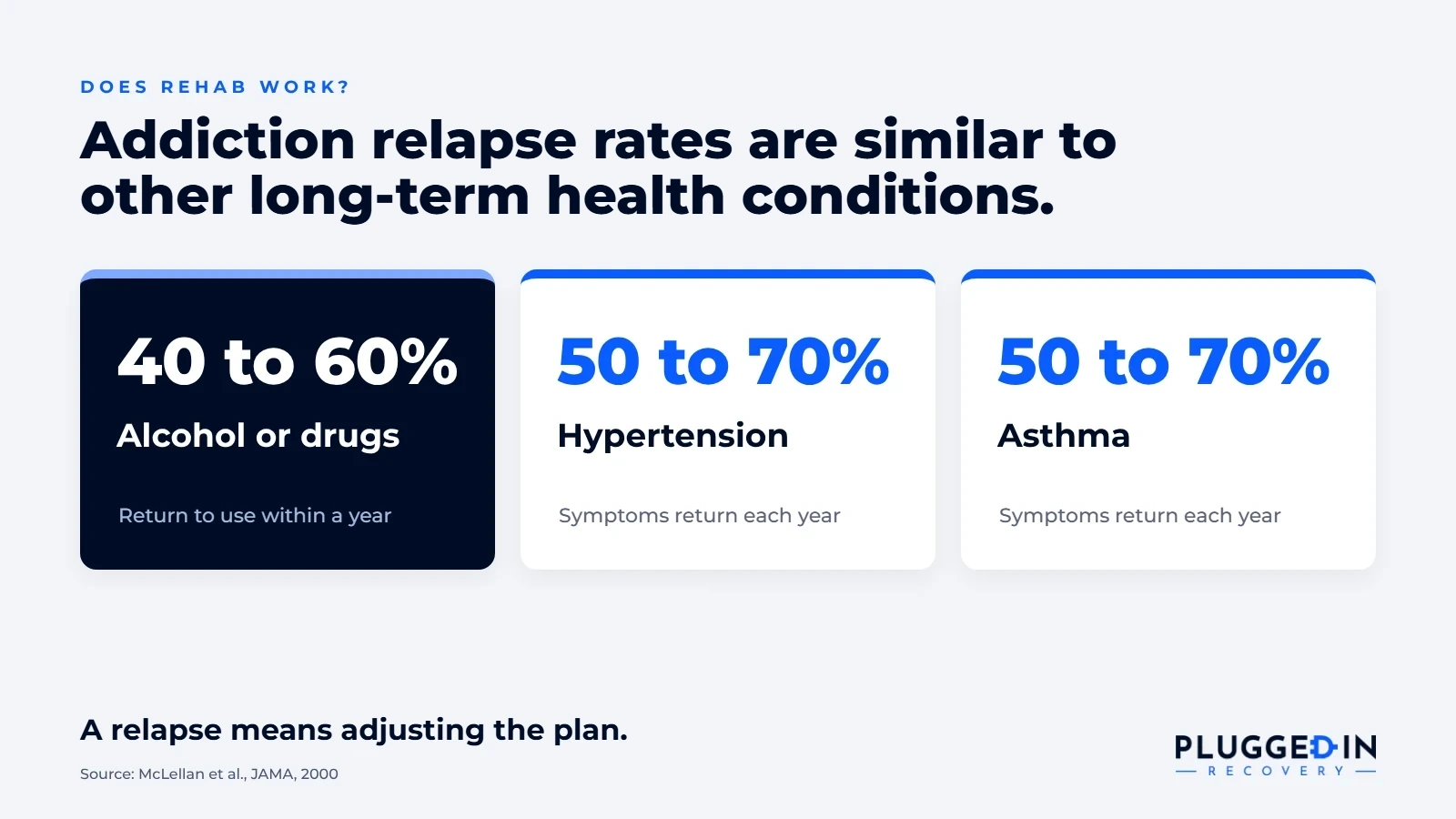
Source: McLellan et al., JAMA, 2000
When someone’s blood pressure creeps back up, the fix is a new prescription, not giving up on treatment. McLellan’s team makes the same point about addiction. A relapse calls for a change to the plan and more support.
Over the long haul, the numbers look better still. The National Institute on Alcohol Abuse and Alcoholism says most people with alcohol use disorder do recover or get a lot better eventually. Plenty of them slipped once or twice on the way.
Recovery is also measured in more than days sober. In treatment, people work on:
- Sleep, energy and physical health
- Focus and reliability at work
- Rebuilding trust at home
- Handling stress without a drink or a pill
The Real Cost of Not Going to Rehab
The price of treatment is easy to see on paper. Waiting has a price too. It just shows up in pieces.
| What treatment costs | What waiting costs |
| A planned stay, often 30 to 90 days | Months or years of slipping at work |
| Program fees, often partly covered by insurance | Medical care as your health takes the hit |
| A structured pause with clinical support | Crises on their own schedule, like ER visits or a DUI |
| Hard conversations, guided by a therapist | Hard conversations at home, with no one guiding them |
When Rehab Is Worth It, and When It Isn’t
Rehab isn’t one thing. Whether it’s worth your money depends on two questions: is this the right level of care, and is this a good program?
Signs Residential Rehab Is the Right Level of Care
Residential treatment usually earns its cost when:
- You’ve tried to cut back or quit on your own and couldn’t
- Stopping brings on shakes, sweats or other withdrawal symptoms
- Anxiety, depression or trauma keep pulling you back
- Most of the drinking or use happens at home
We cover the full list of signs you need alcohol rehab, including the ones people tend to explain away.
Red Flags That a Rehab Program Isn’t Worth the Money
The NIAAA suggests asking any provider direct questions before you commit. Be wary if a program:
- Can’t tell you which evidence-based therapies it uses
- Treats addiction but not co-occurring mental health conditions
- Gives every client the same plan
- Has no clear answer for what happens after discharge
- Won’t explain how it handles a return to drinking
Not sure which level of care fits you? Call our admissions team at 602-527-8096 and talk it through.
What Makes Luxury Alcohol Rehab in Phoenix Worth It
The comfort is real. Phones and laptops are allowed, rooms are private, and you can choose a 12-step or non-12-step path. But what makes the stay worth it is the clinical work under it:
- Stays of 30 to 90 days, based on progress rather than a fixed package
- CBT, DBT and trauma-informed care in every plan
- Dual diagnosis treatment, so anxiety or depression is treated alongside the drinking
- Individual therapy plus daily clinical groups
- Medication management when it’s needed
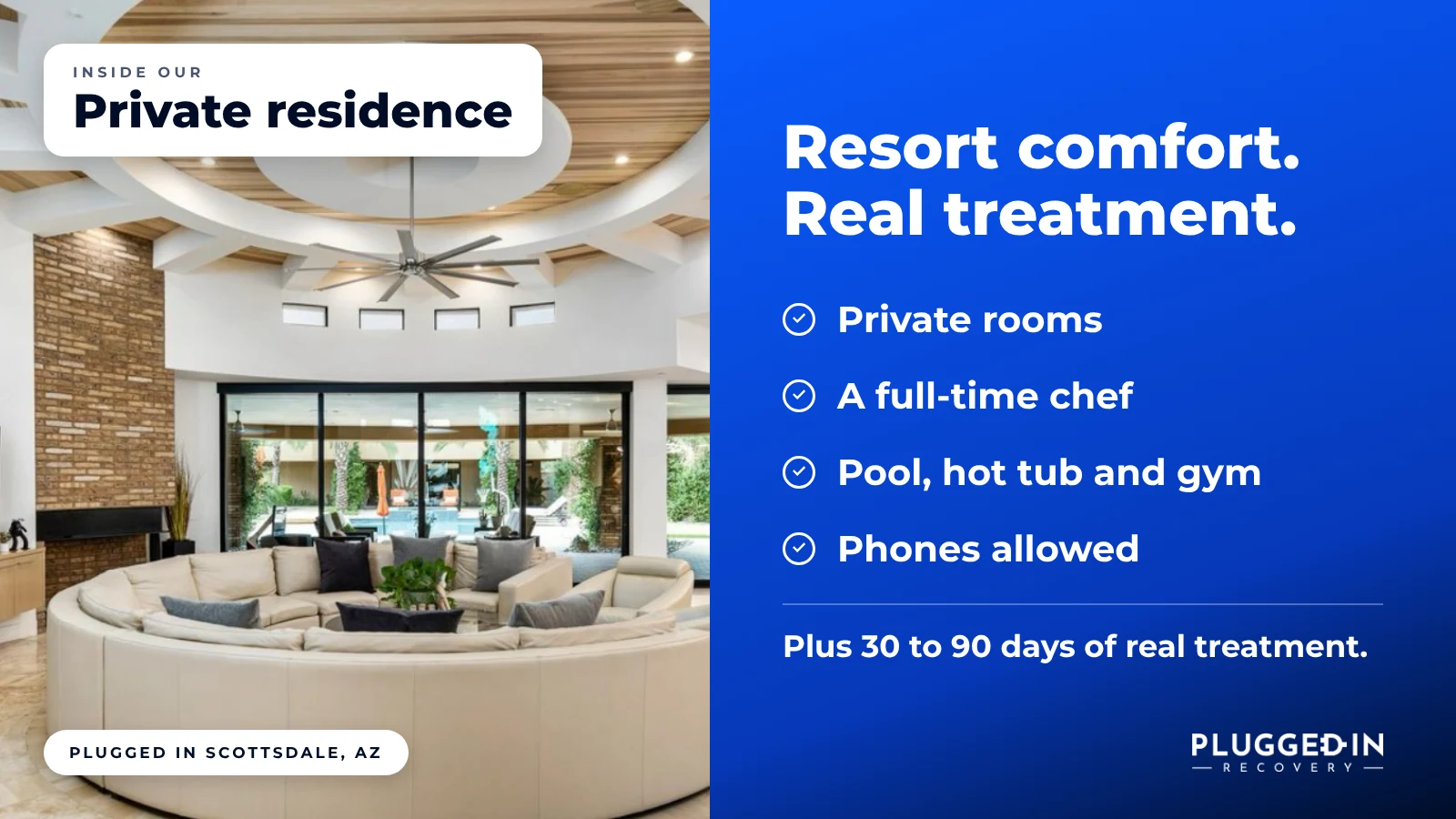
That clinical work is what makes a luxury alcohol rehab in Phoenix more than a nice place to stay.
Paying for Rehab: Insurance and Time Off Work
Cost stops more people than anything else, and time off is a close second. Both are more manageable than they look.
- Insurance: under the Affordable Care Act, all Marketplace plans must cover substance use disorder treatment as an essential health benefit.
- Your own plan: a free insurance verification shows what your coverage includes before you decide anything.
- Time off: the Department of Labor counts inpatient care at an addiction treatment center as a serious health condition, which can qualify you for FMLA leave if you and your employer meet the program’s rules.
For the day-to-day side, we’ve written about how going to rehab and keeping your job works in practice.
How to Get the Most Out of Rehab
People who get the most from treatment see it as the start of recovery, not the end of a problem.
- Let your clinicians set the length of stay. How long alcohol rehab takes depends on your progress, and leaving early cuts the work off before it’s finished.
- Plan the step-down before you leave, whether that’s outpatient care or sober living.
- Bring your family in, so the people at home understand what changed.
Luxury Rehab in Phoenix at Plugged In Recovery
Plugged In Recovery offers residential treatment at our Phoenix and Scottsdale residences, outpatient care in Chandler, and luxury sober living for the step after.
If you’re still weighing whether rehab is worth it, our admissions team will listen, check your insurance and tell you honestly whether our luxury rehab in Phoenix fits what you need.
Call 602-527-8096 or send us a confidential message.