
What Happens in Alcohol Rehab?
At Plugged In Recovery, treatment isn’t one thing that happens to everyone the same way.
It starts with an assessment, moves through detox if it’s needed, and settles into a structured mix of therapy, medical support, and planning for what comes after.
Here’s what happens, day by day, once someone walks through our doors.
It Starts With an Honest Assessment, Not an Assumption
We don’t put everyone through the same program on day one.
Before anything else, we sit down with each person and figure out where they actually stand: how severe the drinking has become, whether medical detox is needed, what else might be going on underneath it- anxiety, depression, trauma- and what level of care actually fits.
That assessment shapes everything that follows.
If Detox Is Needed, It Comes First
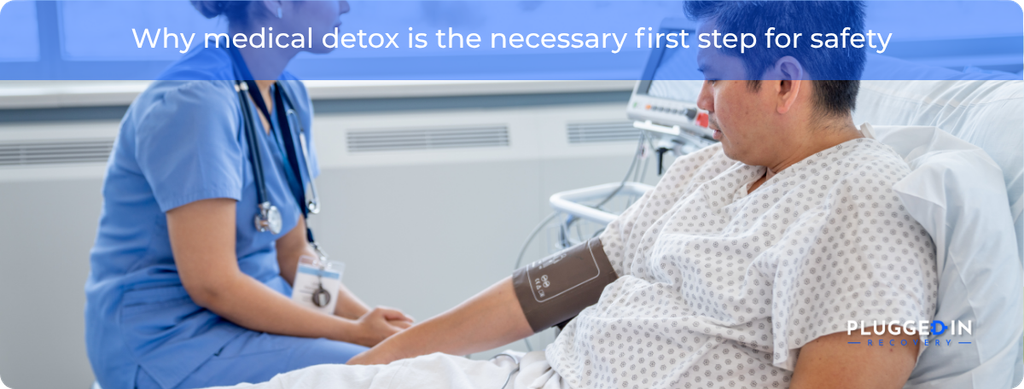
Not everyone needs medical detox, but for people with heavier, longer-term drinking, it’s the necessary first step before any real therapeutic work can happen.
At Plugged In, that means vitals are monitored regularly, medication is provided to ease withdrawal symptoms and lower seizure risk, and a clinical team is present around the clock during the highest-risk window.
We don’t rush this part. If you want the full breakdown of what makes detox safe versus dangerous, our article on is it safe to detox from alcohol at home covers that in depth.
A Typical Day at Our Scottsdale Residence
Once someone’s stabilized, the day fills up fast, and that surprises a lot of people who picture rehab as a lot of downtime.
| Time | What happens |
| Morning | Breakfast, check-in or process group |
| Mid-morning | Individual therapy or clinical group |
| Midday | Recovery groups, psychoeducation |
| Afternoon | Free time (gym, pool), then more individual or group sessions |
| Evening | Evening review, wind-down |
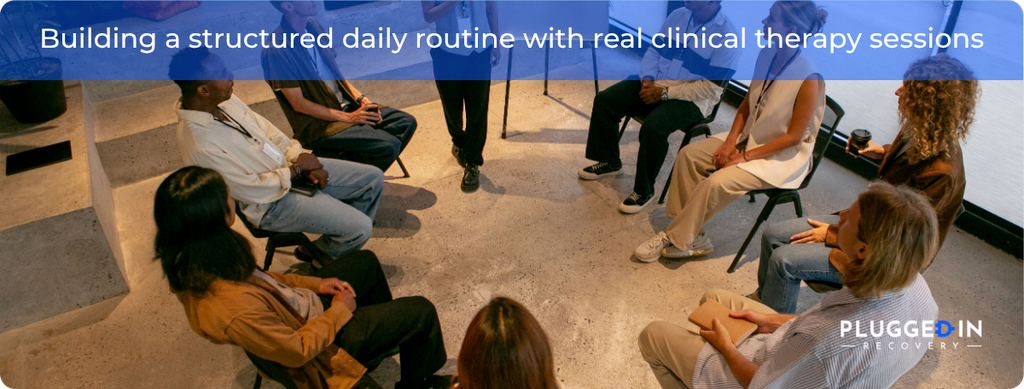
We keep clients busy on purpose. Structured days with real clinical content, not just supervised free time, are what actually move people forward.
You can read more about what a full day looks like in our article on luxury alcohol rehab in Phoenix.
The Therapy Itself
We don’t just talk about the drinking. We use evidence-based approaches, including CBT and DBT, individual therapy, and group work, to address what’s actually driving it.
For a lot of our patients, that includes co-occurring anxiety, depression, or trauma that’s been sitting underneath the alcohol use for years, sometimes without them realizing it.
We don’t rush into heavy trauma work in the first days either. Early treatment is about stabilization, getting grounded, building coping skills, and putting together a real aftercare plan.
Deeper trauma processing tends to come later, often once someone has a stronger foundation to work from.
Recognizing the Problem, Not Just Treating It
Part of what we do at Plugged In isn’t just clinical; it’s helping people actually see the pattern clearly, often for the first time.
We don’t tell people they’re addicts and expect that to land. Recognition happens through repeated, honest conversation, not a single confrontation, which is a big part of why lasting change tends to come from treatment rather than a private New Year’s resolution.
If you want to understand what that recognition process actually looks like, our article on signs you need alcohol rehab covers it directly.
We Treat Patients as Adults
One thing that surprises many people: patients at our Scottsdale residence keep their phones.
We don’t believe stripping away someone’s independence makes treatment more effective; it just adds an adolescent-style restriction to people who are already adults making a hard decision.
We give clients the benefit of the doubt until there’s a real reason not to.
What Comes After
Rehab doesn’t end at discharge, and we don’t treat it that way. Depending on where someone lands, we help step down into PHP or IOP through our outpatient program in Chandler, so the structure that helped someone get stable doesn’t just disappear the day they leave residential care.
We also build a real aftercare plan before anyone leaves: ongoing therapy, support groups, and a relapse-prevention plan tailored to that person’s life, not a generic handout.
If you’re wondering what this would actually look like for you or someone you love, we’d rather answer that on a call than have you guess. (480) 841-9915