

Am I an Alcoholic?
Yes, it is possible to be an alcoholic and not fully recognize it yet. Alcoholism, clinically called Alcohol Use Disorder (AUD), is defined not by how much you drink but by whether drinking has become difficult to control and is causing real consequences in your life.
If you are privately asking, “am I an alcoholic,” that question rarely appears without a reason. People who eventually seek luxury alcohol rehab in Phoenix often describe months or years of asking exactly this question before taking any action. At Plugged In we’re ready to help you with the next step.
The Clinical Criteria for Alcohol Use Disorder
The DSM-5, published by the American Psychiatric Association, defines Alcohol Use Disorder across 11 criteria. A mild diagnosis requires only 2 of these within a 12-month period. Read through them honestly.
- You often drink more or for longer than you intended.
- You have tried to cut down or stop more than once, but have not been able to.
- You spend significant time drinking, recovering, or finding ways to drink.
- You experience strong cravings or urges to drink.
- Drinking has regularly interfered with work, family, or other responsibilities.
- You continue drinking despite it causing conflict in your relationships.
- You have pulled back from activities or interests you used to care about.
- You have been in situations where drinking put you or someone else at physical risk.
- You keep drinking even knowing it is making a health condition worse.
- You need significantly more alcohol than before to feel the same effect.
- When you stop or reduce, you experience withdrawal symptoms: tremors, sweating, nausea, or anxiety.
What your score means:
| Criteria Met | Diagnosis | What This Means |
| 2 to 3 | Mild AUD | A real clinical diagnosis. Earlier intervention at this stage produces significantly better outcomes. |
| 4 to 5 | Moderate AUD | Drinking is meaningfully affecting your life. A professional assessment is strongly recommended. |
| 6 or more | Severe AUD | Structured treatment – residential or intensive outpatient – is the clinically appropriate response. |
Any level of AUD is worth addressing. Research from the NIAAA consistently shows that earlier treatment produces better long-term outcomes than waiting for consequences to escalate.
The Signs People Most Often Miss
Most people who are developing a problem with alcohol do not see it early. The signs build gradually, tolerance increases slowly, and what was once unusual becomes the new normal before anyone pauses to look at the full picture.
The signs people most commonly dismiss are not the dramatic ones. They are quieter:
- Drinking to manage anxiety, stress, or discomfort rather than for enjoyment
- Feeling restless, irritable, or genuinely off on days without alcohol
- Noticing that your tolerance has increased significantly over the past year
- Organizing your schedule or social plans around when you can drink
- Feeling relief and not enjoymentwhen you finally have a drink at the end of the day
These are not automatic diagnoses. They are patterns that clinical intake teams at our luxury alcohol rehab in phoenix see repeatedly and that research consistently identifies as early indicators.

Heavy Drinking vs. Alcohol Use Disorder
Not everyone who drinks heavily has AUD, and that distinction matters.
The NIAAA lists heavy drinking as more than 4 drinks on a single occasion or more than 14 per week for men, and more than 3 per occasion or 7 per week for women.
Heavy drinking is a major risk factor, but the defining feature of AUD is impaired control, not volume.
The honest test: when you have actually tried to cut back, not only considered it but genuinely attempted it, what happened?
If you could not hold to your own limits, or stopping brought physical symptoms, those are meaningful signals worth taking seriously.
What High-Functioning Alcohol Use Disorder Looks Like
This is where most people stop recognizing themselves.
High-functioning AUD is a well-documented presentation where a person continues to maintain their career, relationships, and daily responsibilities while the disorder is actively developing. The external evidence is minimal. The internal reality is not.
The consequences tend to be invisible from the outside:
- Anxiety that surfaces on alcohol-free days
- A constant awareness of not being fully present
- The low-level effort it takes to keep everything looking fine
High-functioning does not mean low-risk. It usually means the window for earlier, less intensive treatment is still open.
That pattern, the career intact, the drinking quietly escalating, is exactly who our luxury alcohol rehab in phoenix is for.
What Treatment Actually Looks Like at This Stage
If you recognized yourself in several of the criteria above, understanding what a real next step looks like is useful. Plugged In Recovery offers two programs depending on where you are and what your life requires right now.
| Residential – Scottsdale | Outpatient – Chandler | |
| Who it is for | People who need to step away from daily life to focus fully on recovery | Professionals, parents, and students who need clinical support without pausing their lives |
| Structure | 30 to 90 days, 24/7 care, private rooms in a 10-bed luxury facility | Flexible scheduling built around work, school, and family responsibilities |
| Therapies | CBT, DBT, dual diagnosis model, holistic and experiential therapies | Structured group and individual therapy, accountability, and community |
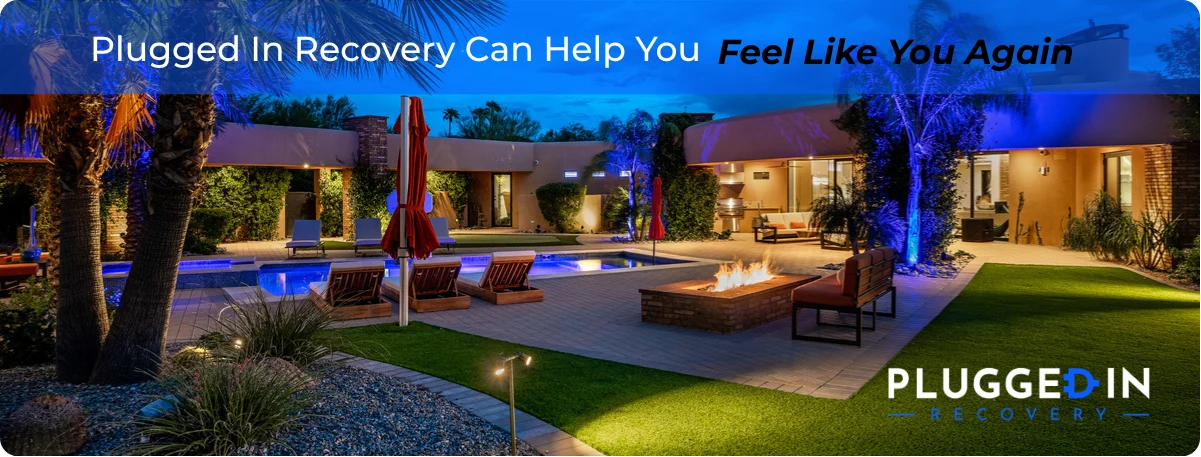
| Setting | Resort-style 5,725 sq ft Scottsdale residence | Community-oriented Chandler facility designed for real-world reintegration |
| Insurance | Most major insurance is accepted | Most major insurance is accepted |
| Intake | Same-day intake available | Same-day intake available |
Both programs offer a confidential admissions conversation with no commitment required to start luxury alcohol rehab in phoenix.
You Recognized Some of These, Here Is What to Do Next
People who are asking, “am I an alcoholic” are often further along in recognizing a pattern than they realize. The question does not usually appear without something behind it.
A clinical assessment with an admissions counselor takes about an hour. It is confidential. It is not a commitment. It gives you an honest picture of where things actually stand based on your specific pattern, not a self-assessment checklist.
If you or someone you care about is ready, the team at Plugged In Recovery’s is available to start that conversation. Calls are confidential, same-day intake is available, and luxury alcohol rehab in Phoenix does not have to mean stepping away from everything that matters to you.
FAQ
What are the signs of being an alcoholic?
The signs of Alcohol Use Disorder include drinking more than you intended, failed attempts to cut back, strong cravings, needing more alcohol to feel the same effect, withdrawal symptoms when you stop, and continuing to drink despite the apparent problems.
A clinical diagnosis requires at least 2 of 11 criteria within 12 months. Even 2 or 3 is enough to consider a conversation with a professional with just a simple insurance verification.
Can you be an alcoholic if you only drink on weekends?
Yes. Alcohol Use Disorder once again is not defined by how often you drink. Someone who only drinks on weekends but regularly exceeds their own limits, cannot stop once they start, or feels physical effects during the week, can still meet the clinical criteria for AUD.
How do I know if I drink too much?
If you regularly drink more than you planned, have tried to cut back and could not, or find that drinking is affecting your sleep, your mood, your work, or your relationships, those are signs worth paying attention to.
What is the difference between a heavy drinker and an alcoholic?
A heavy drinker consumes alcohol above recommended limits but can generally cut back when they choose to. Someone with Alcohol Use Disorder has lost meaningful control. The difference is not how much someone drinks. It is whether they are able to manage their drinking the way they intend to.
Plugged In Recovery Can Help You Feel Like You Again
Whether you’re just starting to question your relationship with substances or you’ve been in the cycle for years, Plugged In Recovery is here to help you break free.
With private, resort-style rehab in Scottsdale and outpatient care in Chandler, our team meets you where you are, with respect, expertise, and personalized care that works