
What Is Luxury Rehab?
Luxury rehab is residential addiction treatment in a private, comfortable home. You have your own room, you can usually keep your phone, and the treatment plan is built around you instead of a group.
The comfort is nice, and it does help people stick around. It isn’t what gets them better. That comes from getting stable, the right therapy and an early plan for life back home.
Below, we walk through what our own residences in Phoenix and Scottsdale include, and we asked Darren Lee, LPC, our Clinical Director, what matters underneath all that comfort.
Key takeaways
- Comfort is the setting, not the treatment.
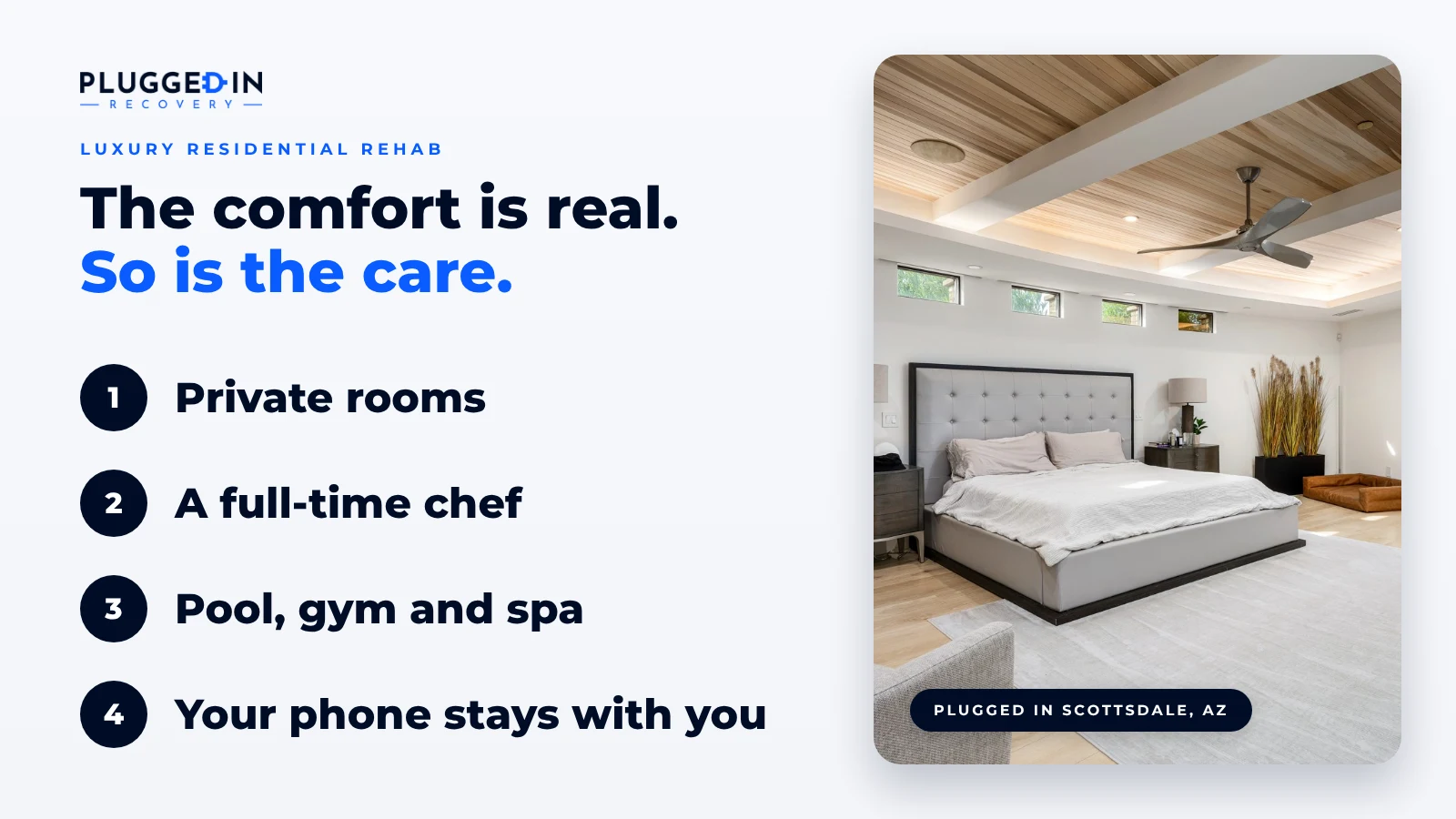
- At Plugged In: private rooms, a chef and your own phone.
- The first weeks are for getting steady, not deep trauma work.
- Discharge planning starts early to lower relapse risk.
What Luxury Rehab Actually Means
Most definitions stop at the amenities. That’s understandable, since the amenities are the easiest part to photograph. But a nice room with a weak clinical program is just a nice room.
The National Institute on Drug Abuse lists the principles behind effective addiction treatment.
Two of them describe what a good luxury program should deliver: treatment that “attends to multiple needs of the individual, not just his or her drug abuse,” and the reminder that “remaining in treatment for an adequate period of time is critical.”
Comfort helps with the second one. People are more likely to stay when they aren’t miserable.
Luxury Rehab Amenities at Plugged In Recovery
Here’s what that comfort looks like day to day at our two residential homes.
Private Rooms and Ensuite Bathrooms
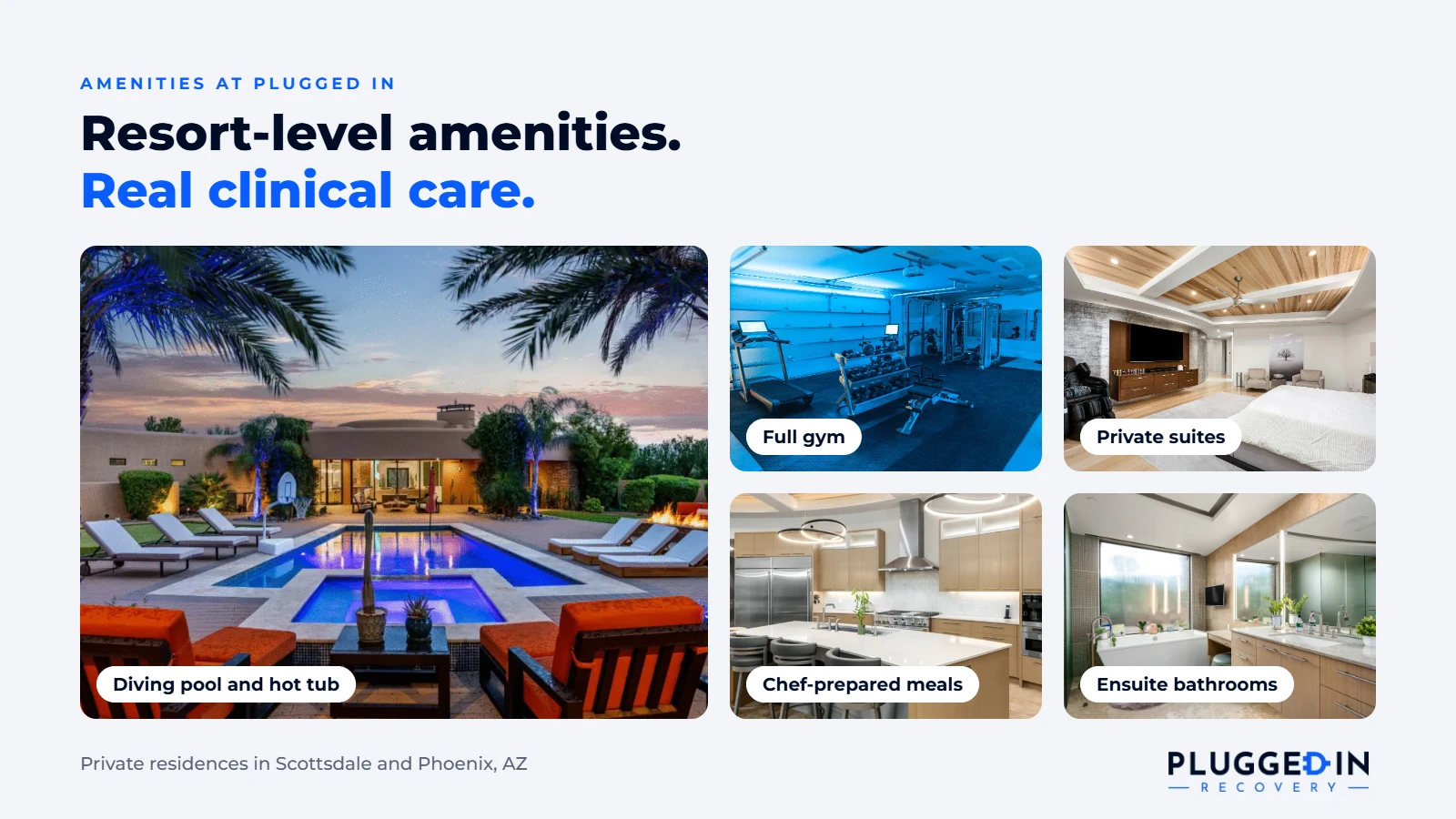
Every room at our Phoenix residence is private, with its own ensuite bathroom, a full-size bed and a TV. Our 5,725-square-foot Scottsdale home has private rooms with Tempur-Pedic queen beds and streaming on every flat-screen.
Having your own space means real sleep, and a door you can close after a hard group.
Chef-Prepared Meals
A full-time chef runs the kitchen in Scottsdale, and meals in Phoenix are chef-prepared too. Nutritional counseling is part of the program, which matters when your body has been running on alcohol or drugs instead of food.
Pool, Gym and Wellness
The Scottsdale residence has a full-size diving pool and hot tub, a full gym, a putting green, a firepit and an in-house movie theater. Phoenix has a zen room for quiet reflection. Both homes offer:
- Yoga and meditation
- Holistic wellness and spa services
- Art therapy
At a resident’s request, we can also arrange massage, acupuncture, red light sauna, cold plunge, IV therapy and equine therapy by referral.
Phones and Laptops Stay With You
This is the one that surprises people. Most residential programs take your phone at the door. We don’t, and Darren doesn’t think taking it would make treatment work any better.
At the end of the day, I’m not sure there’s any real evidence that not allowing somebody to have their phone promotes a better treatment experience or a more effective treatment experience than a place that does allow people to have their phones.
Darren Lee, LPC, Clinical Director
He’s also realistic about the reason other programs lock phones away.
The idea is if people are going to have conversations with their drug dealers, or if they’re going to do some sort of gambling online, or participate in a nefarious way on their phone, then they’re going to do it.
Darren Lee, LPC, Clinical Director
For working professionals and parents, staying reachable is often what makes saying yes to treatment possible in the first place.
What a Day in Luxury Rehab Looks Like
The schedule under all of this isn’t so different from what happens in alcohol rehab at any good program. A typical weekday at our Scottsdale residence runs roughly like this:
- Morning: a chef-prepared breakfast, then a check-in or process group to set goals for the day
- Midday: CBT skill-building, psychoeducation and individual counseling
- Afternoon: life skills, relapse prevention and experiential activities
- Evening: a nightly wrap-up, peer-led meetings and, some nights, a movie in the theater
Therapy draws on CBT, DBT, ACT and trauma-informed care, and you can choose a 12-step or non-12-step path.
Stabilization Comes Before Deep Trauma Work
A common assumption is that residential treatment means opening up every painful memory right away. Darren sees the first weeks differently.
I do believe that our time is best spent stabilizing people, getting them grounded on their feet, and helping them identify, develop, and pursue a strong aftercare plan.
Darren Lee, LPC, Clinical Director
So the early work centers on getting physically and emotionally steady, building coping skills and treating anxiety or depression. Trauma isn’t ignored. Our therapists address it, and Darren is EMDR-certified. The heavier reprocessing usually comes later, once someone is stable.
Do Luxury Rehabs Work?
Short answer: the good ones do, and it has nothing to do with the thread count. A well-known JAMA review compared addiction with other long-term illnesses and found relapse rates were about the same as for high blood pressure or asthma.
Nobody calls blood pressure treatment a failure when the numbers creep back up. You adjust and keep going.
Where someone goes after treatment matters just as much.
If we take a newly recovering person and place them right back into their old environment, the likelihood of relapse is… overwhelmingly high.
Darren Lee, LPC, Clinical Director
That’s why we run luxury sober living for the step after residential care. It gives people a structured, sober home instead of sending them straight back to the old one. So when you’re asking whether a luxury rehab works, look at what it does on the way out.
If you’re still deciding about treatment at all, we wrote a separate piece on whether rehab is worth it.
Aftercare Planning Starts on Day One
At Plugged In, the conversation about life after treatment begins almost immediately.
When somebody enters treatment… the immediate focus needs to be on setting them up for success when they discharge.
Darren Lee, LPC, Clinical Director
By the second week, the clinical team is usually sketching what aftercare will need to look like. For most people that includes:
- Ongoing therapy, weekly or every other week at first
- A step-down level of care, such as outpatient treatment in Chandler
- Sober living when home isn’t a safe place to start
- Community support, from 12-step meetings to other recovery groups
Who Luxury Rehab Is Right For
Luxury rehab isn’t the right fit for everyone, and a good admissions team will say so. For people weighing a luxury alcohol rehab in Phoenix, it tends to make the most sense for those who:
- Need residential care but want privacy and a calm setting
- Have work or family responsibilities and want to stay reachable by phone
- Are dealing with anxiety, depression or trauma alongside drinking or drug use
- Have tried outpatient treatment and need more structure
- Value being treated as an adult making their own decisions
Not sure which level of care fits you? Call our admissions team at 602-527-8096 and talk it through.
Luxury Rehab in Phoenix at Plugged In Recovery
Plugged In Recovery offers residential treatment at our Phoenix and Scottsdale residences, outpatient care in Chandler, and luxury sober living for the step after. Stays run 30 to 90 days based on progress, and same-day admission is available.
If you’ve been comparing programs, see our Phoenix residence, or read about our alcohol rehab program.
Call 602-527-8096 or send us a confidential message.
Ask the Clinical Director
From our conversation with Darren Lee, Clinical Director at Plugged In Recovery.
Has anyone misused their phone at Plugged In?
Well, at Plugged In, no. It hasn’t. But it has absolutely happened at other facilities where I’ve worked that don’t allow phones. So that’s the irony of it.
Darren Lee, LPC, Clinical Director
What happens if someone misuses their phone?
If we discover it, we will put restrictions on it. So it’s not no holds barred phone usage.
Darren Lee, LPC, Clinical Director